Keepers of the Kaap
A short story by Ebrahim Samodien
Share this piece
Pass the story on to your people.
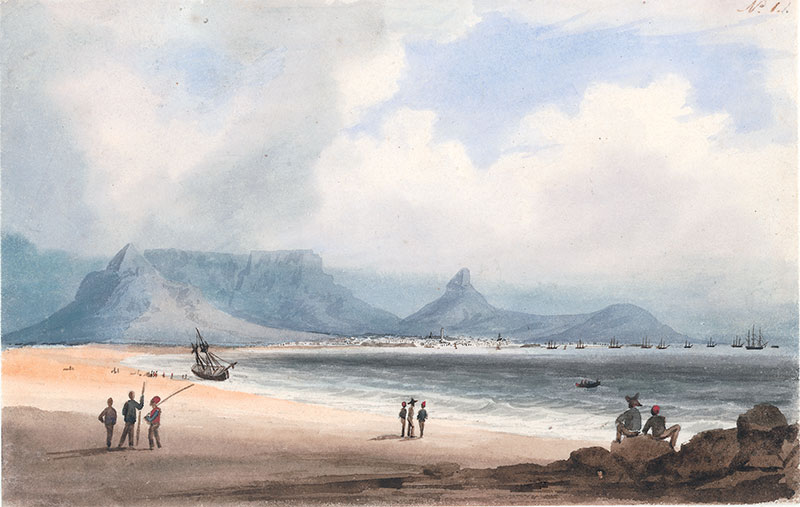
The city glittered beneath the mountain. A table sent down from the Heavens above, spread out and decadent for some.
From a distance, the mountain looked majestic – covered with white walls like angels’ wings in the sun. The ocean waves kissed its shores. Up close, was another matter altogether. The dwellings were tight, no room, not even for angels. Only landlords, the rest spaced out.
The old quarter’s streets once smelled of barley bread, echoing with laughter. Now, the old quarter reeked of paint and polish, sterile – a place kept clean for those who never really live there.
The people were leaving, one by one, not because they wanted to, but because the numbers no longer added up. The rent was due, edging them out without a sound, not even a shove.
Among the locals, in a narrow street that flowed like a river between old houses, lived a man named Abraham. He wasn’t rich, nor was he poor in the ways that mattered. He had once been a teacher, then a carpenter – a real handyman doing what he could. People said he was a man who saw light where others only saw walls. He dreamed of possibilities and fulfilled potentials. Armed with love, with plenty more optimism and hope to go around.
Every morning, he walked to the ocean before the city stirred. The waves, a reminder that the earth still moved freely, even when men boxed in and built fences around everything else.
One particular morning, as the townsfolk were on their way to work, the landlords came not with weapons but with clipboards and contracts. Following behind were surveyors, developers, future owners – in all smiles and sunglasses, lattes in hand, and title deeds held tightly in the other. To them, the earth was nothing but ERF.
Self-employed, Abraham was standing on his stoep looking on, when his neighbor Miriam said, “They say the new design will bring beauty back”. She was an elderly woman who had lived in the community all her life. She had baked for the streets for close to forty years. A generous soul. Like Abraham, a pair of genuinely good Samaritans.
Abraham was looking at her, while from his bag he removed a small envelope. Reaching out towards her, he poured seeds into her cracked hands, asking, “Did beauty ever leave?”
With that, she let out a beautiful smile.
Within weeks, notices appeared on the walls.
Redevelopment.
Regeneration.
Renewal.
The words meant the same thing – departure.
People whispered about relocation with compensation, but everyone knew what it meant. Once you leave, you never come back!
Abraham refused to leave.
He was still fixing what had been abandoned around the town: tightening hinges, repainting doors, teaching children in the empty courtyard. He wasn’t trying to fight anyone. He believed that something sacred still lived there.
A man contrary to the landlords’ plans, he was one who could stir up an uprising.
At the corner store, as police vans crawled past, young men gathered. After sunset, they spoke in low voices about leaving, their cigarettes burning down between their fingers.
Abraham listened.
“We’re being priced out of our own city,” one said.
“Of our souls and soil,” said another..
Abraham then said, “They can’t buy what they don’t understand––”
“What’s that?” asked one of the gentlemen, who was listening attentively.
“Peace.”
They laughed at him, kindly, but also with the sadness of the young who think wisdom moves too slowly.
He’d seen the same pattern before, in a city nearby. Empires are always the same, albeit in new disguises. “Sometimes wisdom demands that you be a fool,” Abraham thought. He didn’t mind being their fool. In that moment, he gave them something that was hard to come by – a laugh.
As time went by, the city walls rose higher, as did its prices. Its establishments were reinforced and strengthened by stone. In the cafés near the harbour, strangers spoke languages that smelled of money, thinking that the mountain was theirs. Yet, it belonged to the people who sang its songs for generations. The townsfolk were being forgotten in real-time.
Still, Abraham stayed.
His stillness was a rebellion.
He was really just teaching the city dwellers how to remember. Others called him stubborn, but quite a few followed him.
They called themselves “The Keepers of the Kaap”.
They met under the great tree in the botanical gardens. This too was in a state of decline and ruin. Not even the indigenous fauna and flora were safe.
Amidst the fallen trees and nature’s exploitation and demise, standing tall as a giant, Abraham spoke of mercy as if it were bread to be shared.
Then, came the day the bulldozers arrived.
The officials came too, dressed in suits, polite as serpents.
“We offered fair prices,” they said.
Abraham stepped forward. “You can take the land,” he said, “but the stories won’t move with you.”
One of the men sighed. “Stories don’t pay the bills, old man.”
Abraham smiled, the kind of smile that makes the heart uncomfortable. “Then you’ve never owned the right things.”
They left him a notice that day – final eviction, forty-eight hours.
That night, however, the construction mafia came looking for him. They could not find him, though. As a native of the land, he knew every nook and cranny, able to hide in plain sight.
Close to their goal. Victory lap in reach, with the checkered flag waving, over the breadline, with the people finished.
Abraham’s time was almost up.
At dawn, he was ready, standing at his door for a long while, touching the frame he’d built with his own hands.
Miriam, who had been hearing the scurrying in the streets through the night, was looking out of her window.
A tear dropped and splattered onto her windowpane.
Seeing him, she recalled a moment from before where Abraham said to her, “Don’t fear the ones who build towers. Fear the day we forget the sky.”
A group of thugs came from down the road. Not even ashamed that their covering of darkness was lifting. Out in the open and in full view. They didn’t care who knew.
Miriam nodded to him to look down the street as if to give him some warning.
Abraham emerged from his house and slowly started walking toward the shore. The thugs behind him knew he had nowhere to run.
Closing in and nowhere to go, standing alone, Abraham turned to them.
“Do you not see?” he said, his voice rising over the wind. “You build walls and call it safety. You build towers and call it progress. But the higher you climb, the less you can hear the earth beneath your feet. Wherever you may be, death will overtake you, even if you should be within towers of lofty construction”.
The waves broke hard that morning. Booming. Some said it was a storm coming. Others said it was the mountain weeping. Abraham made his way into the water, ankle-deep, then knee-deep.
Then just like that, the mist took him. He vanished as if into the water.
Weeks passed by.
The machines came and wrecked everything. The old street was buried under glass and concrete. But the developers could never explain the cracks that began to form in the newly developed buildings – hairline, fractured, and spreading. Some said it was the wind. Others said it was the sea reclaiming what was its own.
Among the workers, though, a story began to spread – of a man who walked into the water and never returned. Some said he’d been seen on the hilltops, or by the fishermen, or among the street children in the new city, still teaching, still fixing things in need of mending.
And, every now and then, when a cool breeze would blow across the city, the people would feel the peace.
Nothing was ever built on Abraham’s square, where his house once stood. Pink flowers sprouted on Miriam’s stoep and really all around the town, wild and uninvited.
Some said the soil refused concrete.
About the author
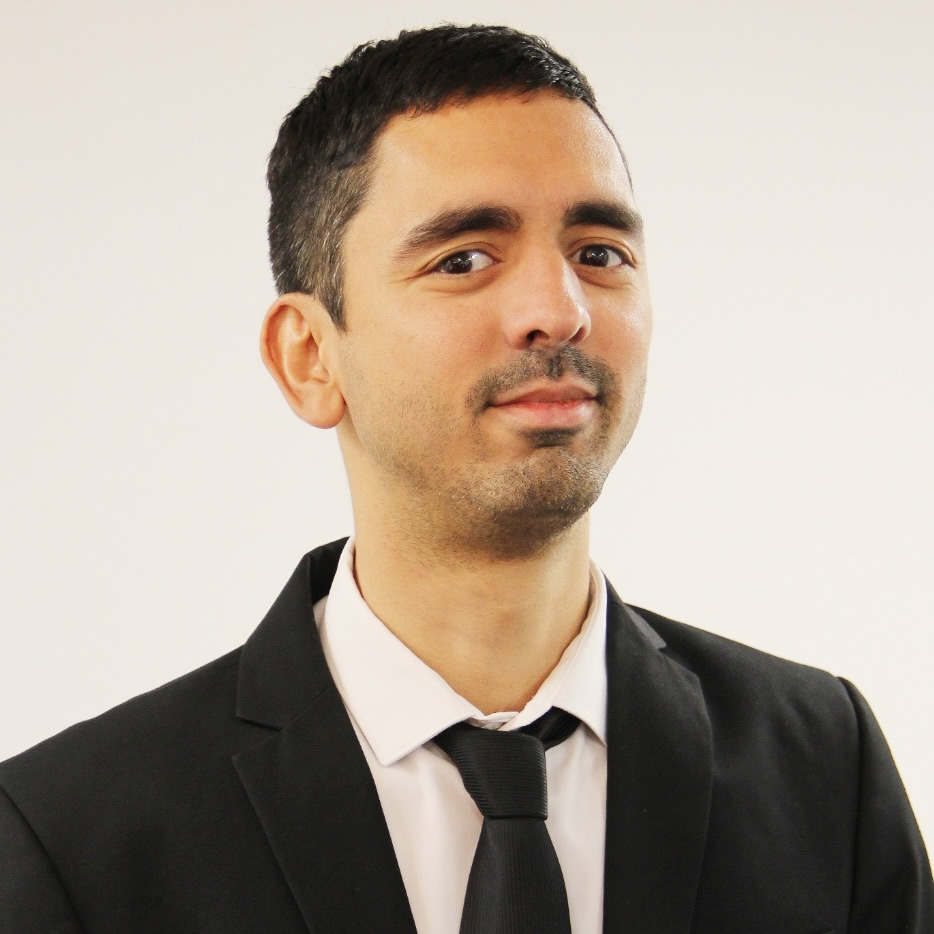
Ebrahim Samodien
Dr Ebrahim Samodien's career has taken him through molecular biology, biomedical research, marketing, communications, television production, and the many worlds that intersect with science. Yet scientific discovery is only one chapter of his story. He is also a published author across genres, non-fiction, sci-fi, romance to drama, philosophical fiction and poetry. Often crafting stories, exploring ideas, or jotting down words before sunrise, writing is his way of making sense of the world. This self-confessed dreamer, daydreamer, and enthusiastic collector of experiences is pretty much his natural habitat when coffee, a croissant, a pencil and a notebook nearby.
View all work by Ebrahim Samodien