Strange. Traumatic. Mystical: When Cows Fly, Women Rise
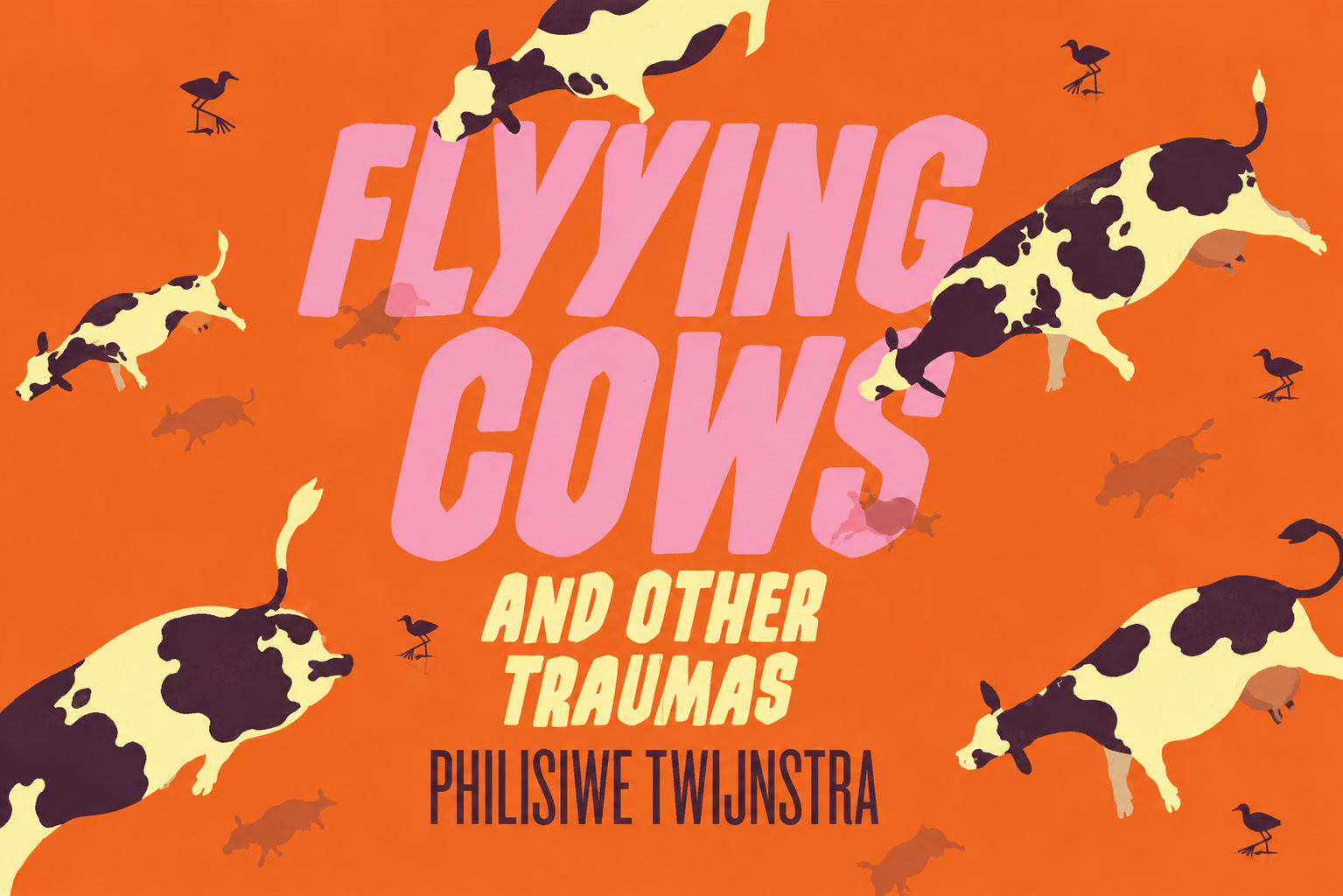
Ralton Morrison reviews 'Flying Cows and Other Traumas' by Philisiwe Twijnstra
Share this piece
Pass the story on to your people.
Publisher: Jacana Media
Type: Short story collection
Date Released: April 2026
Retail Price: +/- R240
Format: Paperback (233 pages)
I picked up my copy of Flying Cows and Other Traumas at the end of a demanding day, hoping for an escape from reality, and the collection delivered one unlike any I expected.
This collection of short stories is described as exploring the breadth of magical realism, speculative fiction and fantasy. Twijnstra portrays women succeeding in the face of adversity. The protagonists – black women – are thrust into magical, terrifying, spellbinding worlds, with stories set in the past, present and future.
Inspired by the haunting allure of Her Body and Other Parties, the raw intensity of Freshwater and the unsettling atmosphere of Intruders, these stories create a bold, darkly imaginative realm where survival is redefined, and power is claimed on unexpected terms. Flying Cows and Other Traumas takes readers on a journey through surreal, unsettling worlds where the ordinary is disrupted by strange, malevolent forces.
Set in black South African townships and imagined African kingdoms, inspired by communities within South Africa, each story covers experiences and subject matter that differ; at the centre are black women. Through different stories, the protagonists face adversity and emerge victorious. In this collection, through a black feminist lens, Twijnstra explores themes of family dysfunction and resilience.
During the book launch webinar, Twijnstra shared how important it is to write characters that are flawed, whilst highlighting the contexts in which our expectations of what it means to be flawed exist.
The keystone in Twijnstra’s writing is how the characters bring the story forth. The surrounding context is then built into the story through layers of obstacles, behaviours, and motivations that would often render a character weak in the traditional sense of what a hero looks and feels like.
Here, we see these characters as strong and heroic even in the midst of their own shortcomings or flawed thinking. At times I wanted more from the protagonist, but in wanting more from them I realised that there was nothing more to give. Every word or decision was exactly as it needed to be from the lens of that character. I think readers would be relieved to experience many variations of what it means to be the hero of their story.
The escape lasted weeks after reading the first story titled, I ate the bones of my father.
Intrigued by the name? So was I.
To say I was mesmerised by the fifteen short stories held between the covers of this collection is an understatement.
Each story leads readers on a journey of magical realism where the characters question oppression, confront family dysfunction, and challenge the cultural expectations imposed on them. These stories champion survival and empowerment.
The mix of social commentary and imaginative story plots allows the collection to move seamlessly between realistic and magical worlds. Some stories lean more on magical elements, while others stay grounded in the real world. Regardless of the direction, I still found myself reflecting on real-life experiences and issues. The stories never come across as preachy; instead, they are enjoyable and engaging because they are, above all, beautiful works of fiction.
The pacing of each story is tailored to the confines of the plot, and readers never feel too rushed or dragged behind.
Each story has a different approach to timeline. Sometimes they are linear, other times jumping from present to past and back again.
Sentences are short.
Dialogue is easygoing and never confusing.
Characters never dwell on an aspect of inner dialogue or reflection longer than they need to, unless that was exactly what was needed to emphasise something in the narrative.
Twijnstra’s words never try to trip you up, but instead guide you with steady clarity, allowing you to move confidently through the twists that emerge along the way.
Between our windows is a story in the collection that struck me like the chord of a cello making its debut in an orchestral performance. The main character is stuck in an endless loop of turmoil and becomes increasingly fixated on the life of her neighbour. The narrative is spellbinding in a way that has the reader on edge, not knowing if they should be laughing at the absurdity, anticipating something to go wrong, or pitying the character’s life. In one of the scenes, the main character says, “I knew disappointment; I collected it like other people collect photographs. I could line every wall of this house with the things that hadn’t survived me.” There are moments like these throughout the collection that draw the complexities of reality in a way that forces us to stare at them without critiquing the character’s behaviour separately.
Then we have characters who defy expectations of who we think they should be, like the secret held by Liyana’s grandmother in The battle of the AK-47s. The image of a gunslinging grandmother taking on political enemies was not on my bingo card, and although humorous, Twijnstra challenges how black women are portrayed in contemporary South Africa. This surprise works precisely because it unsettles what the reader assumes certain characters, especially older black women, are allowed to be within fiction. Twijnstra’s disruption of expectation is central to the collection’s power, as it allows characters to exist beyond the limits of familiar social and literary roles. This is one example of how the collection opens the window of possibilities for us to see the breadth of identities that can be held when characters aren’t imprisoned in tropes.
What also stood out about this collection was the impact of culture and language on storytelling. When I was a teenager, I would ask my friends to translate isiZulu phrases for me to share in the joke during discussions. It was always a challenge because some phrases or emotions are, of course, better said in their original vernacular – this is the case in the story Jack’s whistle.
Jack’s whistle is described as a kind of ‘baby phum’endlini, ngizokuchecka’ whistle, conjuring a feeling and explanation that cannot be replicated when translated into English, for example. It is within these moments that Twijnstra reveals how language carries cultural intimacy, humour, and emotional meaning that cannot always be captured through direct translation. The simple use of “mama”, as opposed to “mother”, shows how language has the capacity to shift the dynamic between a devoted daughter and her overbearing mother. And of course, noting the use of ‘amagwinya’ in the story Amagwinya house is a piece of home that cuts across provincial and continental lines for South African readers. As a Durbanite, this warms my heart.
From a cultural standpoint, each story is grounded in some ideal or perceived ideal that rendered the character vulnerable to an impending twist. Something is always at stake for the characters to navigate, and the question a reader would have to grapple with is whether the cultural ideal was the twist or if it was merely a conduit for that twist to arise.
I’ve been reading books for years, and the monotonous rollercoaster of expectations is something that dulled my experience. The plot twists contained in Flying Cows and Other Traumas had me smiling in a way that I had missed since I was a scholar, reading my newly loaned library books. When I was in high school, I was obsessed with reading the Goosebumps series by R. L. Stine. Albeit a different genre, every story had an anticipated twist that would keep me wanting more. I may not have known what that twist would be, but I knew there would be a payoff. Flying Cows and Other Traumas has captured that feeling and reintroduced me to that thrill as an adult.
Apart from her imagined realms and narratives, Twijnstra skilfully added current sociopolitical commentary in a way that does not impose on the reader, and this is applaudable. It reminded me of the importance of diverse voices and experiences. It reignited my imagination that had stagnated after years of falling through tropes and commonality.
We have an opportunity to create infinite realms that make reading worth the time and money we spend to experience them.
We have rich cultural roots that set us apart from the status quo without needing to force our voices to be heard or experiences to be understood.
In this collection, Twijnstra shows us how, one story at a time.
About the author
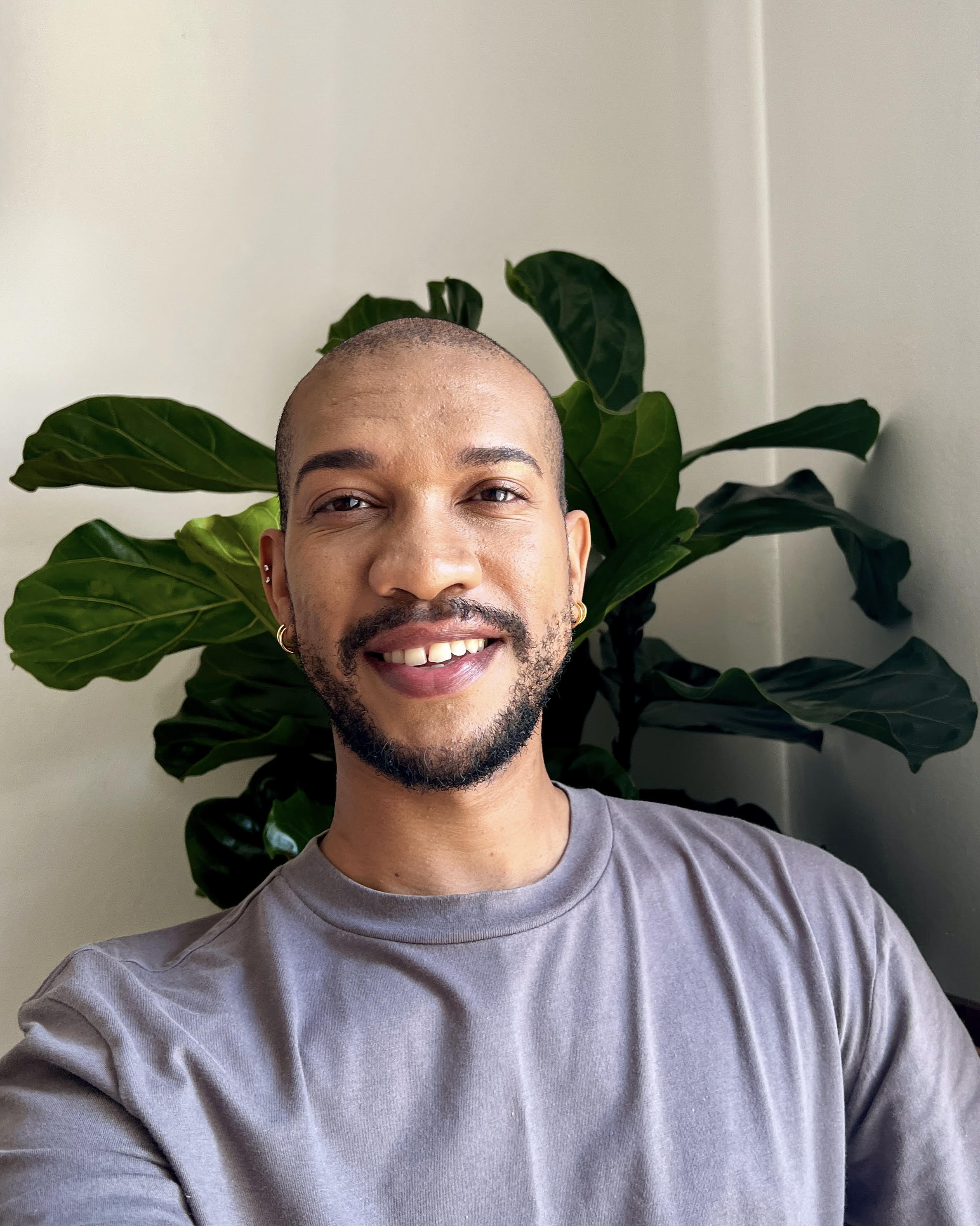
Ralton Morrison
Ralton Morrison is a book reviewer, writer, and content creator based in Johannesburg, South Africa. A Learning Experience Designer by day, he is also the creator of the Sir Ralton publication on Substack where he writes poetry and prose. He shares book reviews on BookTok and Bookstagram, and explores visual storytelling through comic books and anime on his YouTube channel.
View all work by Ralton Morrison