Poetry, Translation and Resistance that Kruip and Crawl Off the Page
Mia Winter reviews 'Kruiper-Crawler' by Shane Van Der Hoven
Share this piece
Pass the story on to your people.
Publisher: uHlanga Press
Type: Poetry collection
Date Released: December 2025
Retaill Price: +/- R250.00
Format: Paperback (90 pages)
I have always admired poets who give language to emotions many of us have experienced but struggled to articulate. Through their work, they voice our innermost thoughts, and Shane Van Der Hoven is no exception.
After undergoing a deeply personal journey and reconsidering my understanding of the world during this regressive period – when war has normalised the mourning of family, friends and loved ones – Van Der Hoven’s Kruiper-Krawler reminded me that I am not alone in feeling alienated or unable to fit in.
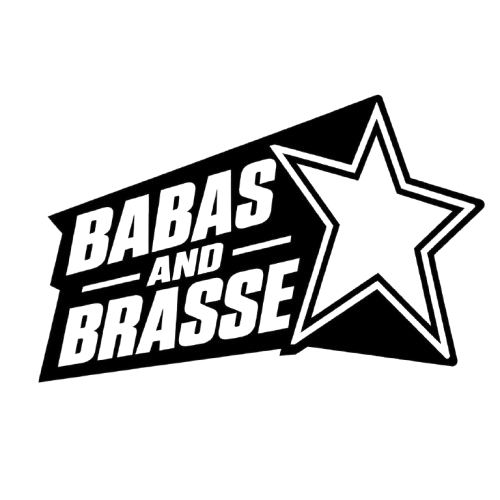
Kruiper-Krawler consists of around thirty poems of varying lengths. Van Der Hoven describes his life journey in South Africa through the figure of this maligned “crawler” across three distinct parts. The first part is called “GRONDMONSTER | SOIL SAMPLE”, the second is “LAEVELD | LOWVELD”, and the third is “OBSERVATORY”.
Throughout these three parts, we follow recurring, interlinked themes revolving around one’s non-linear relationship with self-identity, with golden threads of relatable self-doubt concerning one’s linguistic, sexual, and poetic identity. Van Der Hoven explores focal points of self-identity through heterosexual conventions of identity as a whole. Shane asks how one is expected to fit into a world that does not have a term or category for what they identify with.
There is also evidence of a deep love, need, and desire for learning: chasing after more knowledge and seeking new answers to questions people are too afraid to ask. This is another reason the poetry book stands out in contrast to others.
When I reflect on the collection, what stays with me most is its sense of emotional liberation and triumph: the courage to defend what one believes in. The poems also prompt questions of how knowledge and ideology are passed down. We are taught by educators who were themselves taught by others, but where did these systems of knowledge originate, and who first determined how we should distinguish right from wrong? Science may help us test objective claims, but can the same methods be applied to subjective questions about culture, literature, ethics and identity?
Kruiper-Krawler therefore reminded me of the importance of questioning what we are taught, particularly when inherited beliefs obstruct innovation or personal freedom. Social progress has often depended on people challenging restrictive conventions, including Eurocentric attitudes towards same-sex marriage and women-led businesses.
Van Der Hoven embodies this resistance in his response to the poetry publishing industry. Despite the criticism and discouragement he encountered, he published his work and openly addressed how he felt constrained and betrayed by both literary and queer communities. His decision gave me a newfound respect for him. He did what many people, myself included, are often too afraid to do: he spoke up, challenged those who tried to dictate how others should live, and remained committed to what he believed deserved to be expressed.
One way in which Van Der Hoven advocates for this is mimetically through his writing in Kruiper-Krawler; breaking the conventional norms of how we understand poetry, as taught by canonical literary scholars of the past. This is not to say that there is anything wrong with the beloved poetry classics we know, but I believe Van Der Hoven is advocating for the expansion of what great poetry should (and COULD) look and sound like, while radically advocating for fundamental change in the poetry publishing industry.
The collection mainly stands out for its English and Afrikaans translated versions. In fact, almost every page is translated, including all the paratext. The translations go beyond making his poems accessible to non-bilingual Afrikaans and English speakers because he transadapts the pieces to enhance the meaning of the poems’ core themes. Multilingual readers can witness the witty, insightful, and extremely intentional transadaptation that Van Der Hoven makes use of.
Within this review, I want to focus on how translation adds meaning to the collection beyond purely practical purposes. Translation can be understood as the literal conversion of text from one language to another. My understanding of the goal in translation is to transfer meaning from a source language to a targeted audience, mainly for accessibility and convenience for a wider audience. This is not what is happening in Kruiper-Krawler.
If translanguaging refers to the practice that allows multilingual speakers to use their whole linguistic repertoire to create and understand meaning, transadapting becomes the tool of translanguaging with the prioritising goal of protecting the original content’s meaning above translated lexical accuracy. The intentional decision of Kruiper-Krawler’s Afrikaans poem on the left, and the English on the right on a double-page spread, is a clear indication of transadapting to further reveal underlying themes related to the specific poems. This is not conventionally seen in poetry – far from it actually – this is the main way in which Van Der Hoven plays with the theme of unlearning oppressive lessons, which I will refer to as literary censorship from now on.
This process of transadaptation is not confined to the poems themselves but extends across the collection’s paratextual elements – from the front cover, all the way to the blurb, including the copyright page, dedication page, the table of contents and, most notably, the short preface explaining the choice of translating,
Focusing on the preface in more detail, Van Der Hoven writes on the left page in Afrikaans, “‘n nota aangaande die vertalings”, and on the right page in English, “a note on the translations”.
“the Afrikaans poems poke through their translations // the English poems outrun their counterparts // we have a kweer interference // fuck between them”
The last line caught me off guard, but I gathered some context after reading Van Der Hoven’s master thesis, Translation x Poetry x Gender: A Queer-Feminist Analysis of Afrikaans Poems with English Translations (2018), where he talks about how the process itself of translating poems that were originally written in Afrikaans, for his example, into English, automatically acts as a form of censoring the work to make taboo topics in Eurocentric culture more comfortable for the global majority, particularly around themes of queerness.
To me, “fuck between them” is Van Der Hoven’s way of implying that translation is a form of literary censorship that creates room for further Eurocentric control and domination (e.g., translators can omit clever kweer and intentional double entendres to maintain patriarchal, heterosexual norms for future generations).
“Fuck between them” also makes me think of Edward Said’s Contrapuntal Reading literary method, but instead of reading the same text through the one narrative lens and one hidden colonial lens, Van Der Hoven asks us to read the two lenses (Afrikaans meaning, and English meaning), simultaneously, almost in a diptych-type fashion; asking us to apply how the two different words were curated and chosen for each transladaptation. And how they apply meaning differently.
Focusing on the diptych layout in more detail, the double-page spread displaying the Afrikaans transadaptation on the left, with the English on the right, is done even at the cost of the reader’s convenience. Meaning, his two-page poems in Afrikaans, for example, could have easily been led by being displayed chronologically across a double-page for (canonical) reading convenience, and THEN followed by the English after turning the page. Instead, displaying the two transadaptations in this diptych style forces us to read the two side by side.
The decision creates a battlefield, exposing the rich political and linguistic history between the two languages in South Africa. A bilingual reader may wish to read one poem and then the next, while a reader who is not bilingual may choose to skip the translation entirely. However, it is once you read the poems line by line simultaneously that you will understand the exposing duality that Van Der Hoven is after. It’s like reading with comparison; you want to know if this makes sense in the same way both ways, and when it doesn’t, you want to work out why that is. I think this cognitive reading process brought on by Van Der Hoven acts as training to help you read more contrapuntally. And the goal is for you to read contrapuntally in order to see the problems in how ‘good’ poetry is actually problematically censoring many non-Eurocentric ideologies.
To me, this book reads as a very-much-needed “F-You”, with the middle finger raised to the institutional literary critics who remain within the convenience of their comfort zones; hence, “Comfort is a crawler” – it is comfortable to stay within the familiar. This is no new concept, but I believe Van der Hoven is specifically saying that we need to acknowledge how those who stay in their comfort zones WALK AMONG US. As in, in a world where we are all “crawling creatures” trying to make sense of the world, don’t think that those in authoritative positions to publish what they call “great work” means that it is great work. Literary censorship crawls constantly all around us, and it is vital to be aware of it.
Rhyme scheme, rhythm, and emphasis are probably the most obvious ways to witness literary censorship. In Van Der Hoven’s thesis, he uses the following example:
Imagine a poem written in Afrikaans with the theme of ___, then a translator translates the original line from “milk” (melk) to “strife” to rhyme with “wife” in order to preserve the formal element of rhyming (as ‘good’ canonical poetry has taught us – or as we have been told to believe is ‘good’ poetry). He writes:
The translational changing of the poem’s gender discourse – shifting (relationally and comparatively) from the affirmation of a ‘constructionist’ view of gender to a more ‘essentialist’ angle – not only converts the source text’s gender discourse in a heteronormative direction but also appears to be in conflict with Leipoldt’s potential biographical nonconformity (page 63).
Needless to say, it completely changes the meaning of the poem. This is seen done over and over, particularly when censoring taboo topics around kweerness.
“Leave these things to e.e. Cummings!”, says Van Der Hoven in his poem “a virus”, which ends with my favourite line that I have referenced before: “comfort is a crawler” (pages 22–23). In this poem, I interpret it as Van Der Hoven referring to the poetry publishing industry and calling out people for hating his work, telling him that it is probably not good enough, suggesting that good poetry should remain in line with influential American poets such as Edward Estlin Cummings.
All of this further reinforces how people have completely normalised the poetry industry being portrayed in one particular idealised way that is not meant to be broken or questioned. This means that, when poets such as Van Der Hoven and many other aspiring poets enter the industry wanting to discuss taboo topics such as kweerness, or “dark” erotic topics, for example, there is no opportunity for them to voice these experiences or receive the appreciation their work deserves because of the publisher’s literary censorship. We are continuously reprimanded and made to view poetry in a strict, specific manner that cannot break out of character.
Kruiper-Krawler has been one of those poetry collections that asks to be read courageously instead of comfortably. His greatest achievement is compelling readers to question assumptions they may never have realised they held. If poetry is meant to make us see the world differently, then Kruiper-Krawler succeeds spectacularly.
Whether one reads Kruiper-Krawler for its poetry, its politics, or its remarkable use of transadaptation, the collection refuses to leave the reader unchanged. It lingers long after the final page, because it dares us to think differently. And perhaps that is exactly what good poetry has been trying to do all along. Perhaps that is the irony of Kruiper-Krawler: the crawler is never the poet at all. The real crawler is comfort itself – quietly moving through our classrooms, publishing houses, and reading habits, convincing us that poetry has already reached its final form. Van Der Hoven reminds us that it hasn't, and thankfully, neither have we.

About the author
Mia-Lee Winter
Junior Editor
Mia Winter is our resident editor-in-training. Raised between the mountains and the coast of the Western Cape, she brings sharp instinct and serious heart to everything she writes, reads and edits. After spending a year abroad, Mia returned to Cape Town with a widened worldview and a fascination with the many ways people turn lived experience into language, art, and meaning. As part of UCT's class of 2027, majoring in English Literature and Linguistics, she is building towards a career in teaching, guided by her core belief in learning for life. Impressively, she plays one of her six instruments, composing music, collecting awards, reading, writing her own, or finding new ways to advocate for human, animal, and world rights.
View all work by Mia-Lee Winter