Ghosts Are Not the Scariest Thing in This South African Gothic Thriller
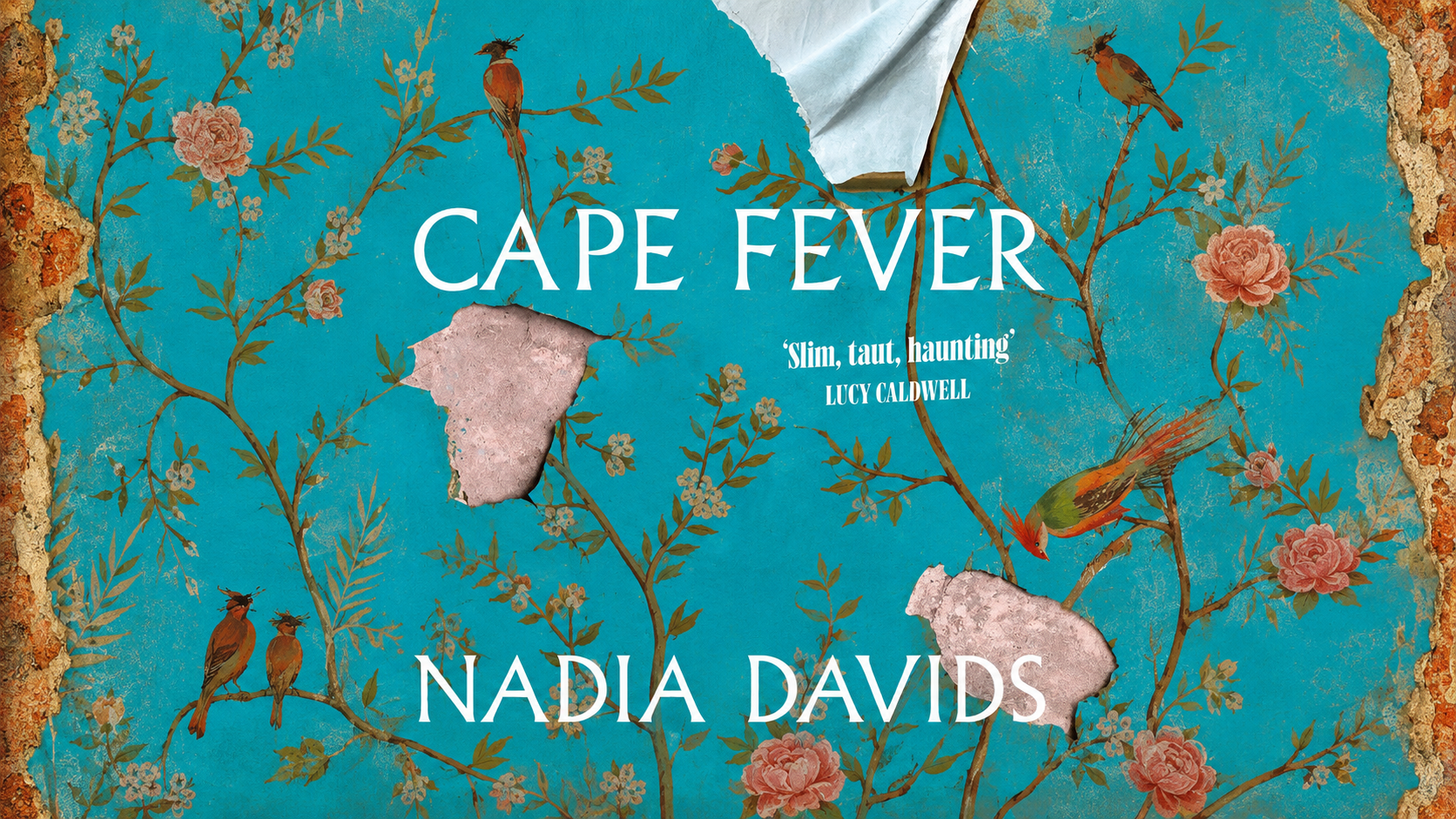
Rushdiyah Narker Reviews 'Cape Fever' by Nadia Davids
Share this piece
Pass the story on to your people.
Ghosts Are Not the Scariest Thing in This South African Gothic Thriller
Rushdiyah Narker Reviews Cape Fever by Nadia Davids
Publisher: Simon & Schuster
Type: Novel
Genre:
Date Released: January 2026
Retail Price: +/- R370
Format: Paperback (240 pages)
“I come highly recommended to Mrs Hatting through sentences I tell her I cannot read.”
From the opening line, the character of Soraya intrigued me.
That one sentence immediately raised questions.
As Soraya recounts her interview for the position as a personal live-in maid to the elderly Mrs Hattingh, she remembers her mother's warnings about what it means to work in another person's home.
The rules are clear: keep yourself small, be obedient, and know your place. Yet, Nadia Davids writes Soraya in such a way that, from the very beginning, the reader knows she is not someone who will quietly accept the limitations imposed on her.
That tension between who Soraya is and who society expects her to be sets the tone for the entire novel.
Set in 1920 in a small, unnamed city within a colonial empire, Cape Fever follows Soraya Matas, a young woman from the Cape Quarter who takes a position as personal maid to the eccentric Mrs Hattingh.
As Soraya settles into her new role, she discovers the house is inhabited by spirits she calls the "grey women". Meanwhile, Mrs Hattingh, a fragile, older white British widow, offers to help Soraya correspond with her fiancé, Nour, by writing letters on her behalf. What begins as a seemingly kind gesture gradually develops into a ritual that binds the two women together in increasingly unsettling ways.
Because of Soraya’s race, class, and position as a servant, Mrs Hattingh repeatedly crosses boundaries she has no right to cross, treating Soraya less as a person with her own desires and more as an extension of her own needs, under the guise of care.
The novel explores how power can disguise itself as kindness, protection, and concern while quietly stripping people of their autonomy. These themes never feel forced or heavy-handed. Instead, they emerge naturally through Soraya's experiences, making them all the more effective.
Despite the restrictions placed upon her, she possesses a quiet resilience and inner strength that made me root for her from the very first page. Her determination to hold onto herself despite constant attempts to diminish her is what makes her so memorable.
One detail that particularly resonated with me was Soraya's ability to see spirits, whom she calls the "grey women" – reading this immediately brought to mind the Afrikaans phrase, "Sy is met die helm gebore." It created an instant sense of familiarity and connection, making Soraya feel like someone I knew rather than simply a character on a page.
Davids brings the Cape to life with vivid detail.
Mrs Hattingh's house feels oppressive, decaying, and haunted long before the supernatural elements fully emerge. In contrast to Soraya's life away from work, her family home is filled with warmth, love, and humanity. This contrast becomes especially poignant when tragedy strikes. The grief Soraya experiences later in the story was one of the most emotionally affecting parts of the novel for me. Despite the clear power imbalances Soraya experiences as a live-in maid in a 1920s white-ruled South Africa, the circumstances surrounding her loss perfectly illustrate how loss, being beyond our control, often has devastating consequences.
Furthermore, the suspense throughout the novel builds slowly and deliberately, like a bolt being tightened one turn at a time. Rather than relying on dramatic twists or constant action, Davids steadily increases the emotional pressure until it becomes almost unbearable. The gothic elements deepen the sense of unease without overshadowing the emotional core of the story.
When the release finally comes, it is incredibly satisfying.
There is, however, one criticism I would raise. I would have loved to see more Kaaps incorporated into the narrative. Although the novel is written entirely in English, it is set in a time and place where Kaaps was widely spoken, before Afrikaans was formalised in schools, and this should have been more prevalent in the novel’s dialogue. Davids’ previous work, such as At Her Feet, effectively captures how multilingualism is embedded in everyday Cape Town life, as well as in the broader landscape of how language is used in South Africa. Including Kaaps in the dialogue would, therefore, have added another layer of authenticity to an already rich historical setting.
Despite the criticism, I loved this gothic, psychological thriller.
Few books have made me feel such intense sadness and anger while reading. There were moments when I had to put the book down simply to process everything Soraya was experiencing. In my opinion, if the slow psychological tension doesn’t feel like tension, you probably haven’t experienced this kind of oppression.
As someone who rarely sees stories that reflect the lives and histories of coloured women in the Cape, this novel felt particularly meaningful. Historical fiction like Cape Fever offers a way to imagine lives and experiences that have often been overlooked while reminding us of the enduring impact of the past.
Overall, Cape Fever is a haunting and emotionally powerful exploration of class, race, power, grief, and resistance. With its compelling protagonist, rich historical setting, and steadily mounting tension, it is a novel that has stayed with me long after the final page.
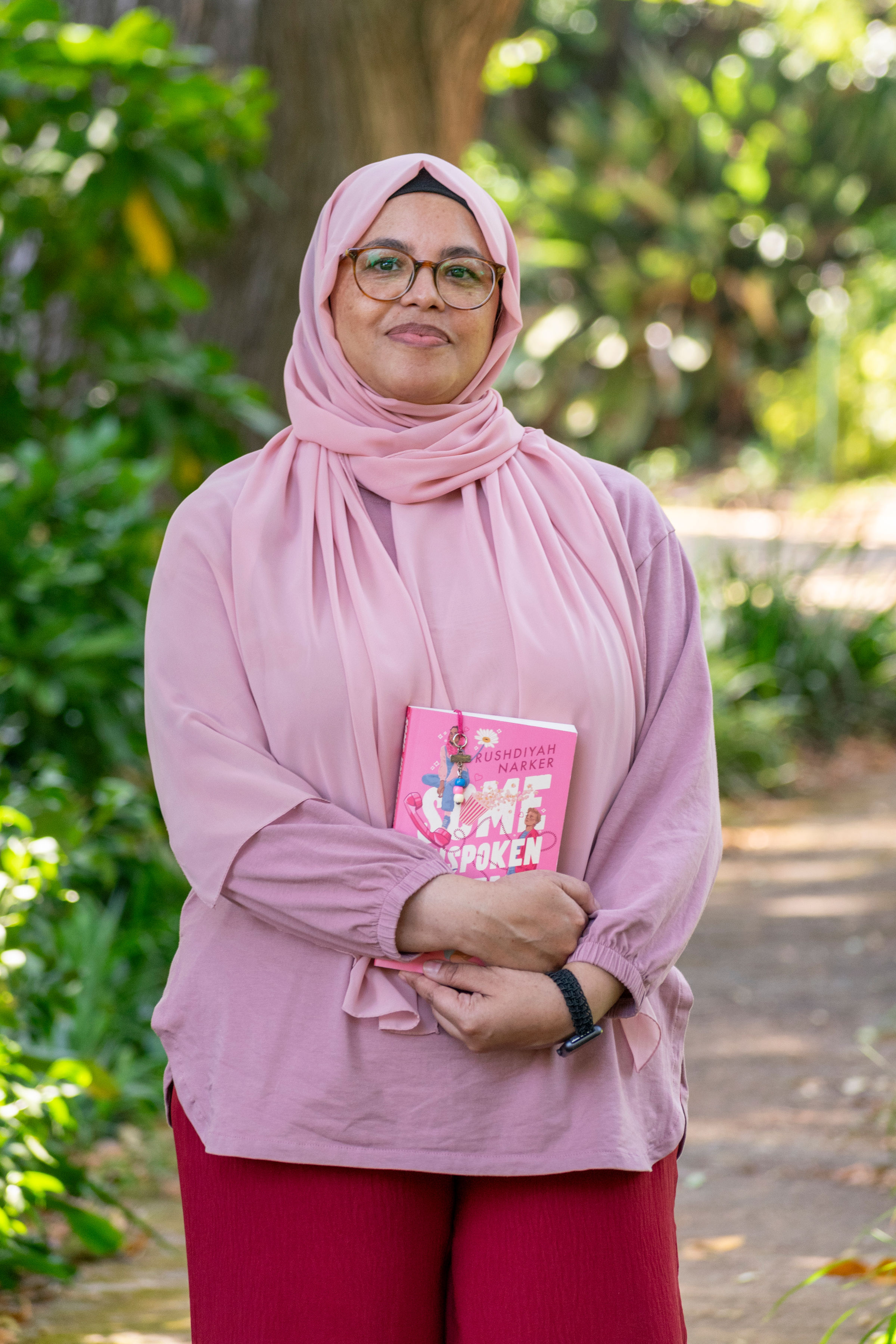
About the author
Rushdiyah Narker
Rushdiyah Narker has moved from making up stories in her head to writing them down. She uses the skills she learnt while getting her Masters in Social Anthropology to write stories about the culture she grew up in. 'Some Unspoken Thing' is her debut young adult novel enjoyed by kids 13 to 60 years of age. For funsies, she reads a book a day and loves to go to the theatre, galleries, and movies to experience different forms of storytelling.
View all work by Rushdiyah Narker