The Bite-size Cost of Being an Artist
Zizi Masizana reviews ‘FLIP-FLOP’ at Artscape Theatre
Share this piece
Pass the story on to your people.
Script: Rafiek Mammon
Direction: Rafiek Mammon
Starring: Deon Lotz and Gary Naidoo
Venue: Artscape Arena Theatre
Genre: Comedy / Cabaret
Performance Dates: 28 October 2026 – 31 October 2026
Artscape’s annual New Voices programme, presented in association with Suidoosterfees and the City of Cape Town, seeks to usher emerging practitioners into the professional arts sector while encouraging innovation in writing, form, subject matter and audience engagement.
Within this annual programme, FLIP-FLOP, written and directed by Rafiek Mammon, presents a cabaret-style production that highlights the unpredictable realities of working as an actor in South Africa’s cutthroat entertainment industry.
Featuring established performers Gary Naidoo as Randal and Deon Lotz as Andy, the production explores the highs and lows of an acting career in today’s South African context, where professional recognition, callbacks, and the promise of the next opportunity remain uncertain, however established they may be.
The performance establishes its theatrical environment before the performers even begin.
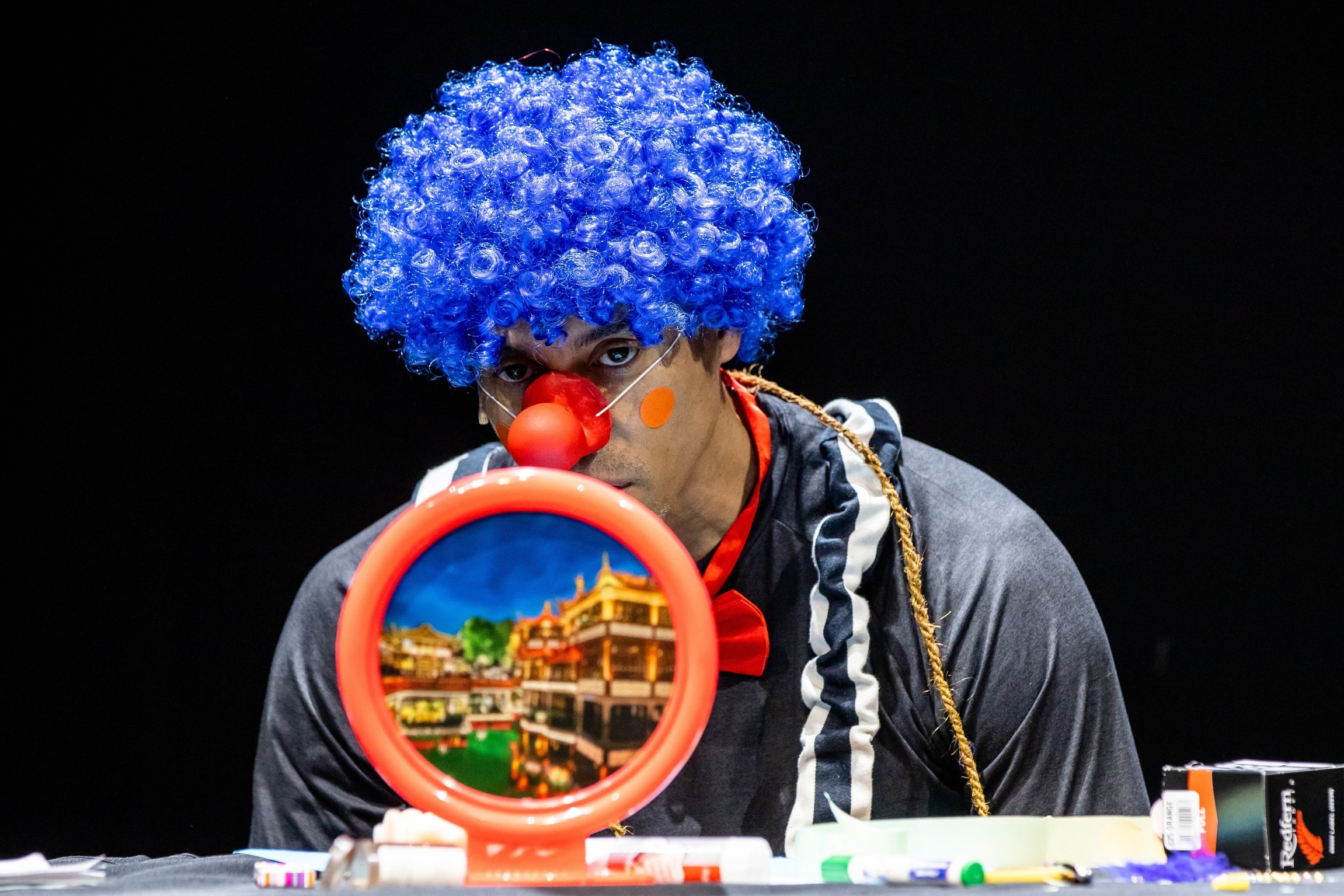
Two black-clothed tables occupy the stage, each furnished with toy vanity mirrors displaying images of overseas destinations, alongside makeup, wigs, and other backstage paraphernalia. The arrangement evokes the private rituals of performers preparing themselves backstage or ahead of a performance for public consumption. The consistent lighting creates a subtle distinction between the backstage and theatrical worlds, allowing the audience to experience both the performance and the machinery that brings it to life.
The play opens with Andy and Randal reflecting on their careers and the challenges of the entertainment industry, using familiar musical references to establish an accessible entry point for the audience. However, with the instrumental opening of Puccini’s Nessun dorma, from Turandot, the production shifts from its initially realistic, dialogue-driven world into a more theatrical, cabaret-style performance, introducing an operatic grandeur that contrasts with its earlier naturalism. ABBA’s Money, Money, Money reappears with independently written lyrics, reimagining the familiar song within the production’s own theatrical vocabulary. A reference to My Favorite Things from The Sound of Music, which also inspired Ariana Grande’s 7 rings, further demonstrates how popular culture continually recycles, reinterprets and repackages familiar material. These musical references invite audience recognition whilst allowing the director to establish their own commentary.
Beyond the theatricality and humour of cabaret lies a more uncomfortable conversation about the conditions under which performance artists in South Africa work. By placing performers in a position where they must continually prove their worth, the production draws attention to the pressure to remain entertaining, responsive and capable of meeting personal and professional demands, often at considerable cost. This expectation extends beyond the stage, reflecting the precarious conditions under which many artists are expected to work. South African creative industries are not immune to the economic inequalities that characterise the broader labour market: unpaid rehearsals, delayed payments, inadequate fees and the romanticisation of working for exposure have become familiar concerns for many practitioners. Passion is frequently presented as sufficient compensation for labour, while the financial realities of sustaining an artistic career remain largely unaddressed.
Through Andy and Randal’s struggles, Mammon draws attention to the economic precarity experienced by artists, raising broader questions about its relationship with South Africa’s racial history. The distribution of cultural resources, access to institutional support, and opportunities for professional advancement continue to raise questions about who gets to create, who gets recognised, and who benefits financially from cultural production.
Representation alone does not, at all, translate into economic transformation. An industry can celebrate diversity onstage while retaining unequal structures behind it.
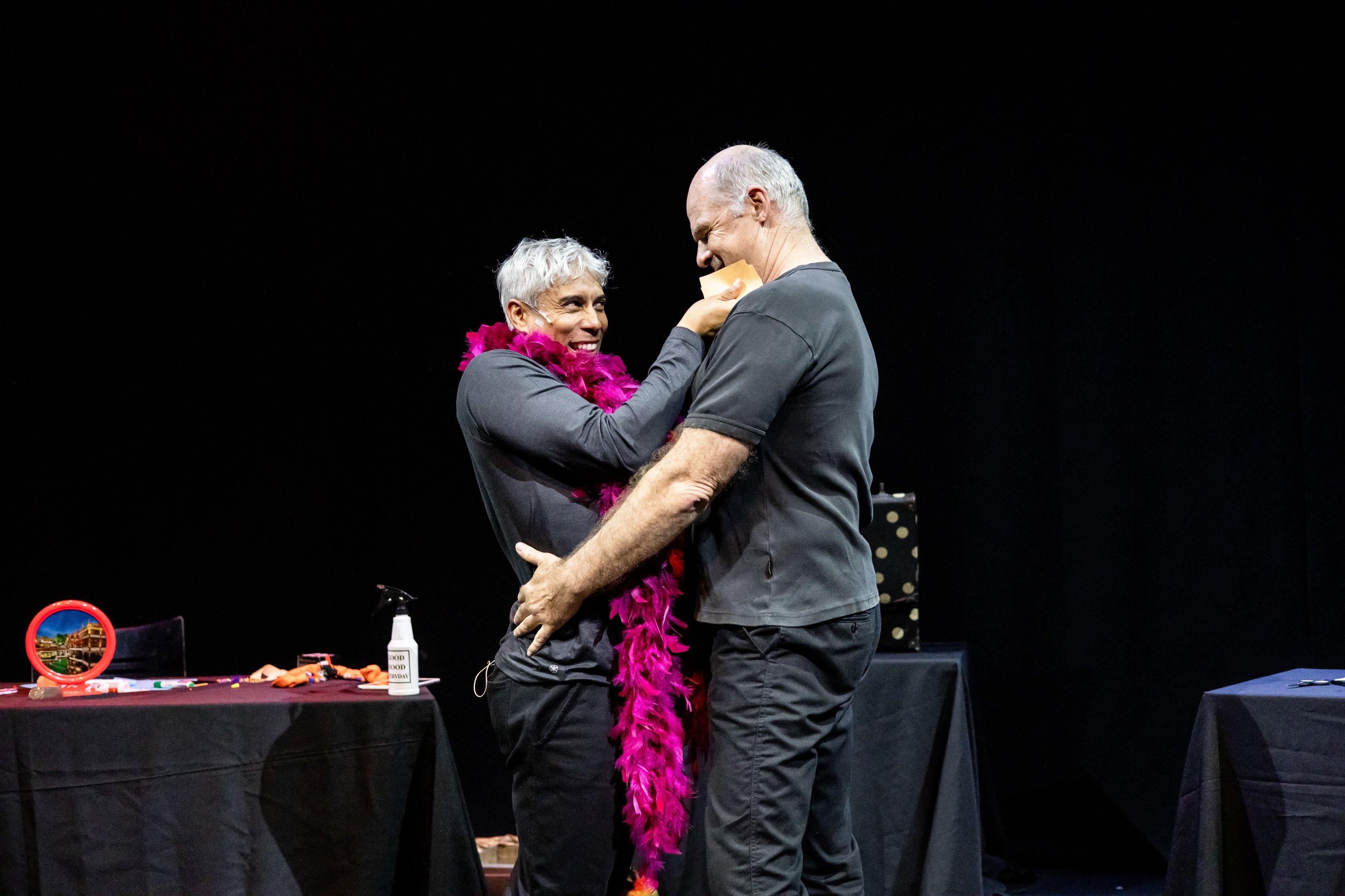
Despite Mammon’s witty dialogue, he effectively raises subtle questions about the compromising situations in which artists, particularly men, may find themselves, exposing the potential coercion and unequal power dynamics that can exist within professional artistic environments. Although cabaret is a form of live theatrical entertainment featuring music, song, dance, comedy, drag, and drama, it is also rooted in a tradition of sharp social and political commentary. Casting directors, producers, and established practitioners can exercise considerable influence over emerging performers’ careers, as the dependence on professional recommendations, employment, and future opportunities can make challenging inappropriate conduct and behaviours particularly difficult. Therefore, the language of artistic freedom and creative vulnerability can sometimes and oftentimes become entangled with expectations that compromise personal boundaries.
These forms of violence are distinct, but they intersect through the unequal distribution and balance of power. FLIP-FLOP further raises questions about the responsibilities artists have towards one another. How do we respond when the industry that provides our livelihoods becomes a source of exploitation? More importantly, what happens when practitioners who have experienced these conditions eventually reproduce them?
The proposition that violence begets violence offers an interesting framework through which to consider this cycle. Malcolm X’s arguments, as referenced in this bite-sized production, about resistance and self-defence challenge the expectation that oppressed individuals should passively accept the conditions imposed upon them. Applied to the creative industries, this invites us to reconsider what resistance looks like for artists who are expected to remain grateful, agreeable and professionally accommodating, even when their labour and dignity are continually compromised.
The performing arts and entertainment industry positions itself as a space for freedom of expression and a vehicle for societal change. Yet the conditions under which artists live, work and create often contradict the very freedoms and ideals that the industry claims to champion. This gap between perception and reality is worth confronting, both as artists and audiences.
We are encouraged to create thought-provoking work that challenges injustices and raises questions about the societies and communities we inhabit. Yet, institutions that enable this work often perpetuate the very hierarchies and oppressions we seek to challenge. Still, we continue to claw for survival within these spaces, often with little access to those who hold institutional power beyond their names and company logos appearing on show posters. FLIP-FLOP became an invitation for me to reflect and interrogate institutions and their positions within the structures we as artists exist in, rather than this being a direct theme explored in the production.
This made me further reflect on a certain irony: theatre and creativity offer us a rare privilege to play pretend; to act on things we do not in real life, to create the better world we would actually like to live in. On stage, we confront injustice, demand accountability and perform acts of courage that we likely do not exercise beyond the curtain call or even in rehearsals. Audiences, including those who occupy positions of power, applaud these critiques only to return to the very systems and behaviours being criticised. We too often confuse the performance of moral consciousness with actually practising it. And we get away with it, hoping we have incited enough morale, rage or inspiration in audiences so that they may go out and change our world.
Undoubtedly therein lies theatre’s value, too. It allows us and, by extension, invites others to confront what we might not have the freedom or courage to challenge in reality. For artists, this reluctance often stems from the fear of blacklisting, unemployment, or jeopardising livelihoods within institutions on which we depend. Others have simply grown tired of challenging systems that take more than a “moving piece of art” to dismantle. Our complicity, then, is not always a matter of choice, but often one of survival.
I commend Mammon, a well-known and prominent theatre-maker, playwright, director, and arts journalist, based in Cape Town, for consistently using his expertise to guide, mentor, and advocate for young talent through his contributions to NATi Jong Sterre, New Voices, Suidoosterfees, and various other artistic platforms. And here, once again through FLIP-FLOP, his production reminds us, the audience, of the struggles artists face in today’s society. The struggles that I and many other young artists face are reflected on stage, allowing us to feel seen and understood. I thank Mammon for continuing to use his platform not only to nurture emerging talent, but also to give a voice to the challenges we face within the creative industry.
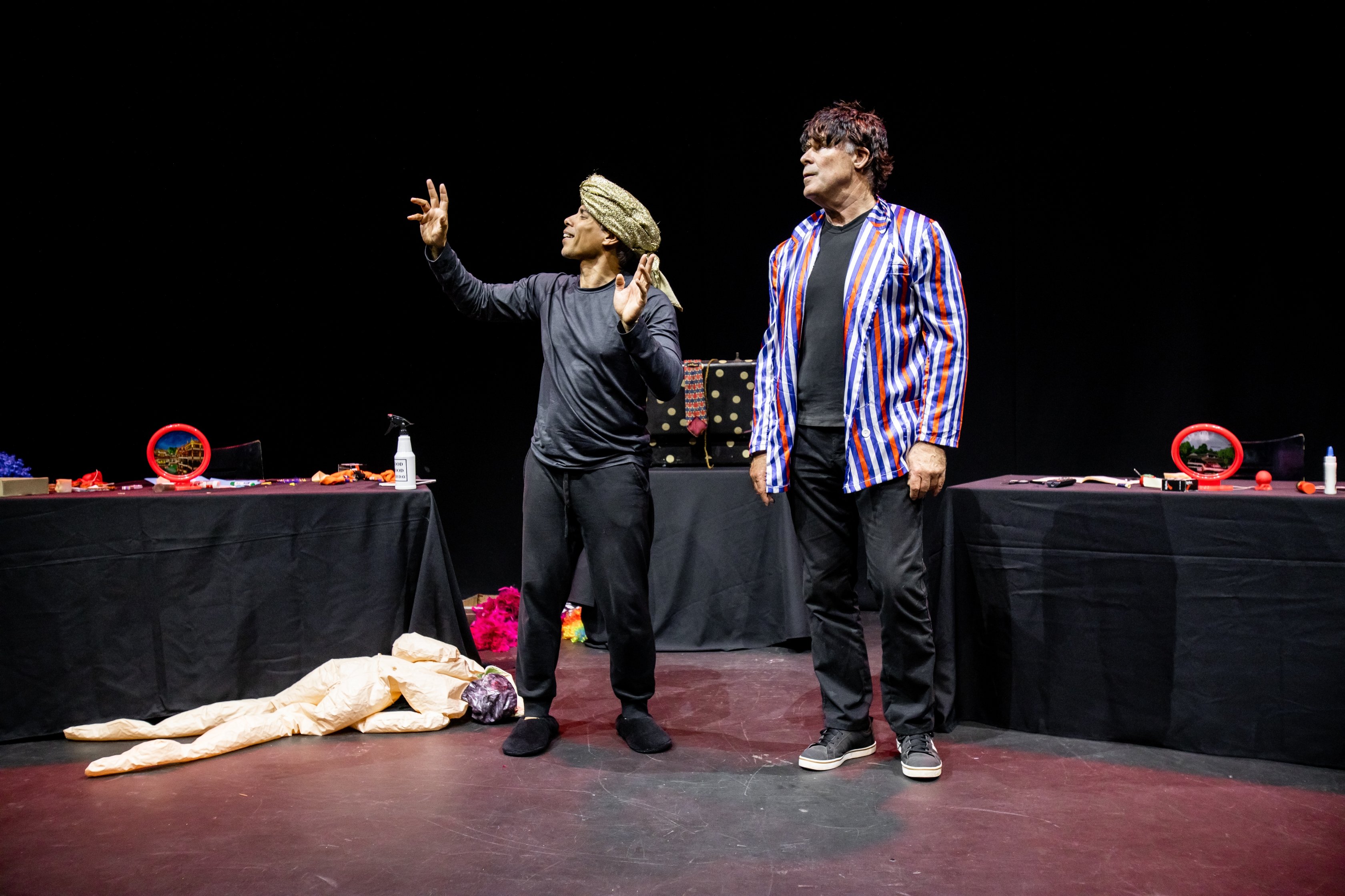
Ultimately, the significance of FLIP-FLOP extends beyond the familiar uncertainties of a career in performance in South Africa. Its exploration of the performer’s professional existence provides an opportunity to consider the instability beneath the glamour of the stage. The artist is expected to transform, adapt, entertain, and remain EMPLOYABLE and mentally sound, often without the financial or institutional security necessary to sustain even their most basic needs.
Perhaps the more pressing question is not simply what it means to make a living as an artist, but what we have come to accept as the cost of being one.
Can we continue to perform liberation for an audience whilst perpetuating, and often experiencing, the very exploitation we condemn amongst ourselves? If the next generation of practitioners, the very new voices we claim to champion, inherits these same conditions, are we truly making an effort to probe and eventually transform the industry, or merely teaching them how to survive its violences, one compromise in bite-size proportions at a time?
About the author
Zizi Masizana
Zizi is an emerging performance artist, theatre maker and technician from Cape Town. She can be found at the theatre doing any and everything; honing her craft, learning and exploring. Her practice right now is about remaining curious, observant and cultivating rituals that’ll aid her craft. Her eventual aim is to create overwhelming sensory experiences as live art, theatre and storytelling.
View all work by Zizi Masizana