Where the World Ends, the Women Keep Watch
Rushdiyah Narker reviews ‘The Sound of Ice’ by Megan Choritz
Share this piece
Pass the story on to your people.
Publisher: Melinda Ferguson Books
Type: Novel
Date Released: July 2026
Retail Price: +/- R340.00
Format: Paperback (237 pages)
There is something about Megan Choritz’s ability to write women that I absolutely love.
She creates female characters and experiences that stay with you, and The Sound of Ice was no exception.
Having read her previous novel, Lost Property, I knew I would be pulled into the new world she's created immediately, and a sick day in bed turned out to be the perfect time to read this one in a single sitting.
A constant, creeping sense of dread runs through the novel. You can feel that something is terribly wrong, and the further you get into the story, the more unsettling the world becomes. Each chapter left me wanting to know what would happen to the four women we met, making it difficult to put the book down.
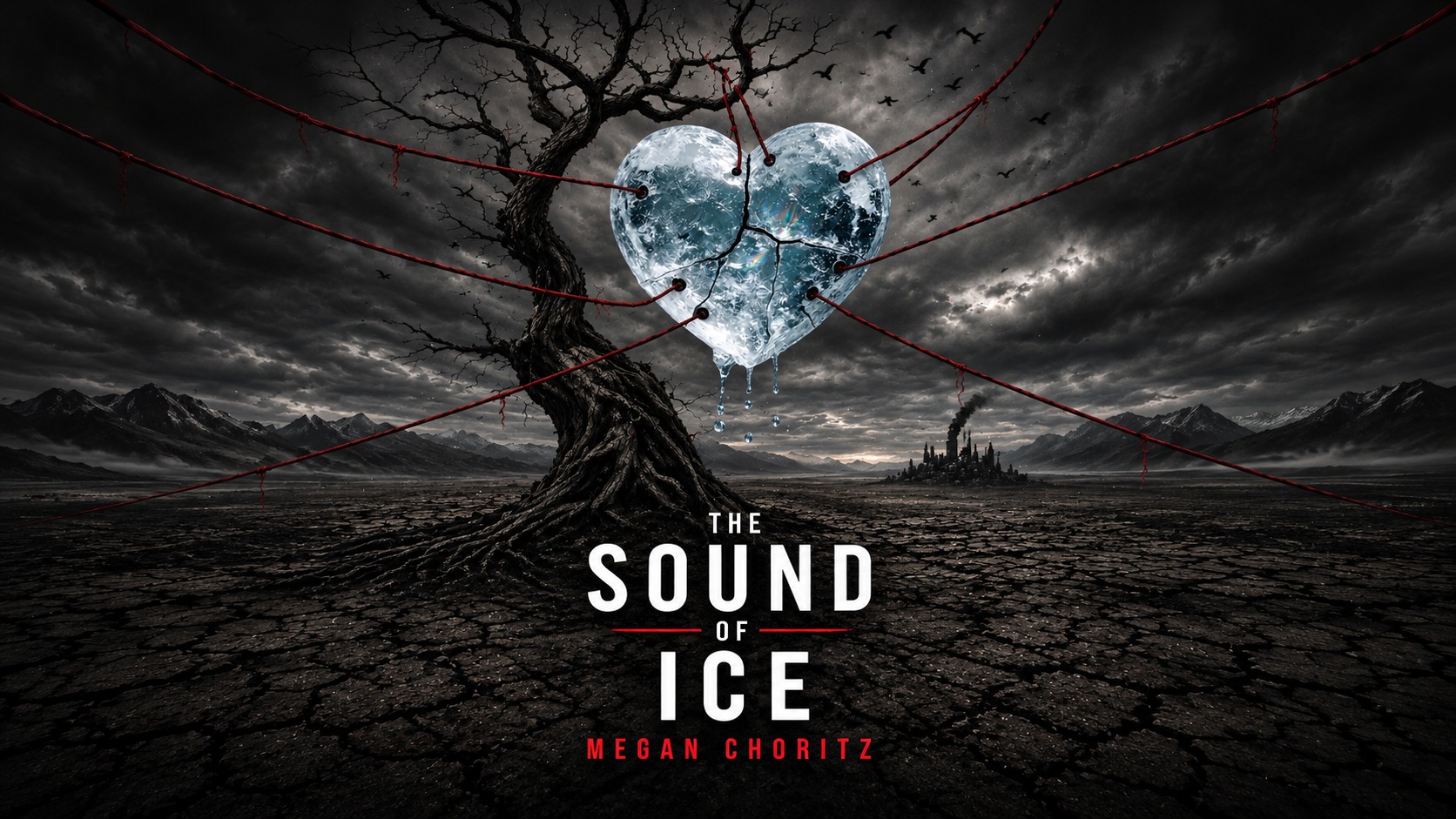
Far out at sea, 167 tiny boats form a silent ring around a solitary iceberg. Each boat holds a mother and daughter with one mission: watch the ice, protect it, and survive. We meet Lucy and her Ma, who have sought refuge on one of these boats because they need somewhere to hide. The author builds a mystery around what they are running from, and I kept reading to find out. There is also something not quite of this world quietly threaded through the story, which I won't spoil. When the iceberg comes under attack, the Water Wars erupt, forcing Lucy and Ma to make a choice. In the process, Lucy discovers a side to her mother she never knew existed, one that will change her life completely. At its heart, this is a story about surviving in a world that is constantly trying to crush you.
The novel presents a climate dystopia, a world devastated by environmental destruction and the consequences of humanity's treatment of nature. It is the end of the world as we know it, marked by societal collapse, political instability, and the breakdown of systems that once provided security. Water has become a precious commodity, making the iceberg and the boats surrounding it vital to the survival of those who live there. Each boat has a block of ice to chip away at for tea, whilst a monthly food package offers some assurance that its occupants will not go hungry. For Lucy and Ma, these provisions provide a fragile sense of security in an otherwise unforgiving world. The attack on the iceberg threatens that security, forcing them to confront the dangers beyond the life they have come to know. Choritz constructs this dystopian world convincingly, not simply through descriptions of its devastation, but through the ways the characters interact with their surroundings and navigate the limitations imposed on their lives.
What really got me thinking was the dystopia itself.
While the environmental collapse and Water Wars might feel like speculative fiction, I couldn’t help thinking about how close some of these possibilities could be to our reality, especially with the increasing implementation of AI into so many aspects of our lives.
The questions around technology, power, control, and who gets to decide the future feel particularly relevant. Every time I open an app, there is some kind of built-in AI programme asking how it can help. So much money has been invested in this technology that it feels as though our participation is demanded.
And the cost isn’t abstract.
A UN University report found that data centres used about 4.5 trillion litres of water in 2025, and it projects their water footprint could reach 9.3 trillion litres a year by 2030, equal to the basic domestic water needs of 1.3 billion people in Sub-Saharan Africa. Against these figures, the water crisis in the book doesn't seem so far-fetched. We are already living with the consequences of global warming. Just look at Cape Town’s increasingly unpredictable weather. What unsettled me most about Choritz's dystopia was not how different her world is from ours, but how easily I could imagine us arriving there.
The novel also explores women’s resilience, the violence women experience, and the ways women find to protect and care for one another even when the world has seemingly abandoned them.
Female solidarity and sisterhood run through the whole story, from the safe havens created for vulnerable women escaping violence and abuse to women supporting other women whilst they recover from illness and heal from their past circumstances. Their survival against the odds feels hard-won, and it had me on the edge of my seat until the very last page.
The story unfolds through the eyes of four women: Charlotte, Ma, Lucy, and Maria Lucia. I particularly enjoyed how each perspective offers a different experience of womanhood in a patriarchal world.
Choritz is especially skilled at exploring the relationship between trauma and memory, showing how the past continues to shape the women's understanding of themselves and the decisions they make. Rather than simply moving the characters from one plot point to another, she allows us to experience the emotional weight of what they have survived and how that influences their relationships with others. Although the four women have different histories and experiences, they share a common set of values rooted in compassion, loyalty, and the desire to protect those they love. It is through these shared values that a found family takes shape, reminding us that family is not always defined by blood, but sometimes by the people who choose to stand beside us when we have nowhere else to turn.
The mother-daughter relationships at the centre of the novel carry particular emotional weight, especially in a world where protecting the next generation has become an act of survival in itself, yet this fierce maternal instinct extends beyond biological relationships.
Throughout the story, women assume the responsibility of caring for and protecting those who have experienced violence, often putting themselves at risk to ensure another woman's safety. I found this particularly moving because Choritz presents care not as a weakness, but as a form of resistance against a world that has become increasingly cruel. This also makes the novel's subtle magical elements feel surprisingly natural.
In a world where so much has been destroyed, there is something almost otherworldly about the lengths these women will go to protect one another. The magic never feels entirely removed from the emotional reality of the story; instead, it becomes another way of exploring the extraordinary strength that emerges from love, sacrifice, and the instinct to survive.
Choritz’s writing style is gorgeous. The prose is delicately poetic, where she uses the five senses to paint the imagery the characters see. A line from Lucy on the first page captures this beautifully, “I wake up to the sounds I know. There is the lonely yawning of the big ice, a creak and scream. There is a huge continuous slam of ocean against the wall of ice.” The vivid imagery and personification bring the icy landscape to life, making it easy for readers to lose themselves in the world of the novel and the minds of its characters. Choritz’s use of first-person narration allows readers to access each character’s thoughts without the storytelling feeling clunky or forced. Through Lucy’s description of the ice, I immediately sensed her familiarity with her surroundings and the safety she feels aboard the boat.
What stayed with me most was how Choritz writes about her women. She is so skilled at centering the female voice, even when there are men in the story – women are not just victims or superheroes; they’re scared and tired and tender, and still they keep going.
The violence isn’t there for shock value either; it’s just part of the world, which makes it feel painfully real. And the way the women look after each other, the solidarity and the mother-daughter bonds, shows that caring for others is its own kind of strength.
As a South African woman, I didn’t have to stretch far to relate. Many of us already plan our days around safety, and gender-based violence is something we live with, not just read about. Cape Town’s Day Zero showed how quickly water can become a real threat, so Water Wars didn’t feel that far-fetched. And the women holding each other up reminded me of the mothers, aunts, grandmothers, and friends who hold so many of our communities together. Choritz doesn’t ask us to imagine a dystopia so much as show us a version of what we’re already navigating, with a bit of hope that we won’t have to do it alone.
And can we talk about that ending? I don’t know how she did it, but despite all the darkness and horror of this story, she leaves us hopeful. The characters are forced to face their fears, which makes their journeys feel hard and often awful, but it also shows how gratitude blooms in the small ways they get to live despite all the hardship they endure.
Choritz suggests that hope and suffering can exist side by side, and that’s exactly what makes the ending so powerful. She never wipes away the horrors that came before, so the hope feels earned rather than convenient. She lets the pain sit right next to the possibility of something different, a hope that comes from simply enduring, getting back up, and taking another step with whatever is left. That honesty is what stayed with me because I feel like so many of us have felt that feeling too.
The Sound of Ice is a deeply unsettling, thought-provoking read that had me questioning just how fictional this dystopian future really is. Because sometimes the scariest dystopias are the ones that don’t feel entirely impossible.
What disturbed me most about this novel was the same unpleasant feeling I got from reading The Handmaid’s Tale by Margaret Atwood. It’s unsettling because if we keep going down the path of the manosphere and keep ignoring the climate crisis, this fictional world could be a not-so-distant future.
Through its exploration of human trafficking, political corruption and environmental destruction, the novel reveals how the abuse of power has devastating consequences for ordinary people, particularly women. But Choritz never allows these larger issues to overshadow the characters at the heart of the story. Long after I finished reading, I found myself wondering whether Lucy was okay and what more could possibly go wrong for the poor girl. I think that is what makes this novel so effective. We become so invested in these women's lives that the dangers they face no longer feel like distant, fictional possibilities. Instead, they force us to confront the consequences of the decisions we make, and those we allow others to make on our behalf. It is a timely reminder that the future Choritz imagines is not entirely beyond our control, but that preventing it requires us to pay attention to what is happening in our world today.
In the end, Choritz leaves us with an uncomfortable question about the kind of future we are creating, but also a reminder of what is worth protecting in the first place. And perhaps that is the greatest strength of this novel: even through a dystopian society, there will always be something to hope for.
About the author
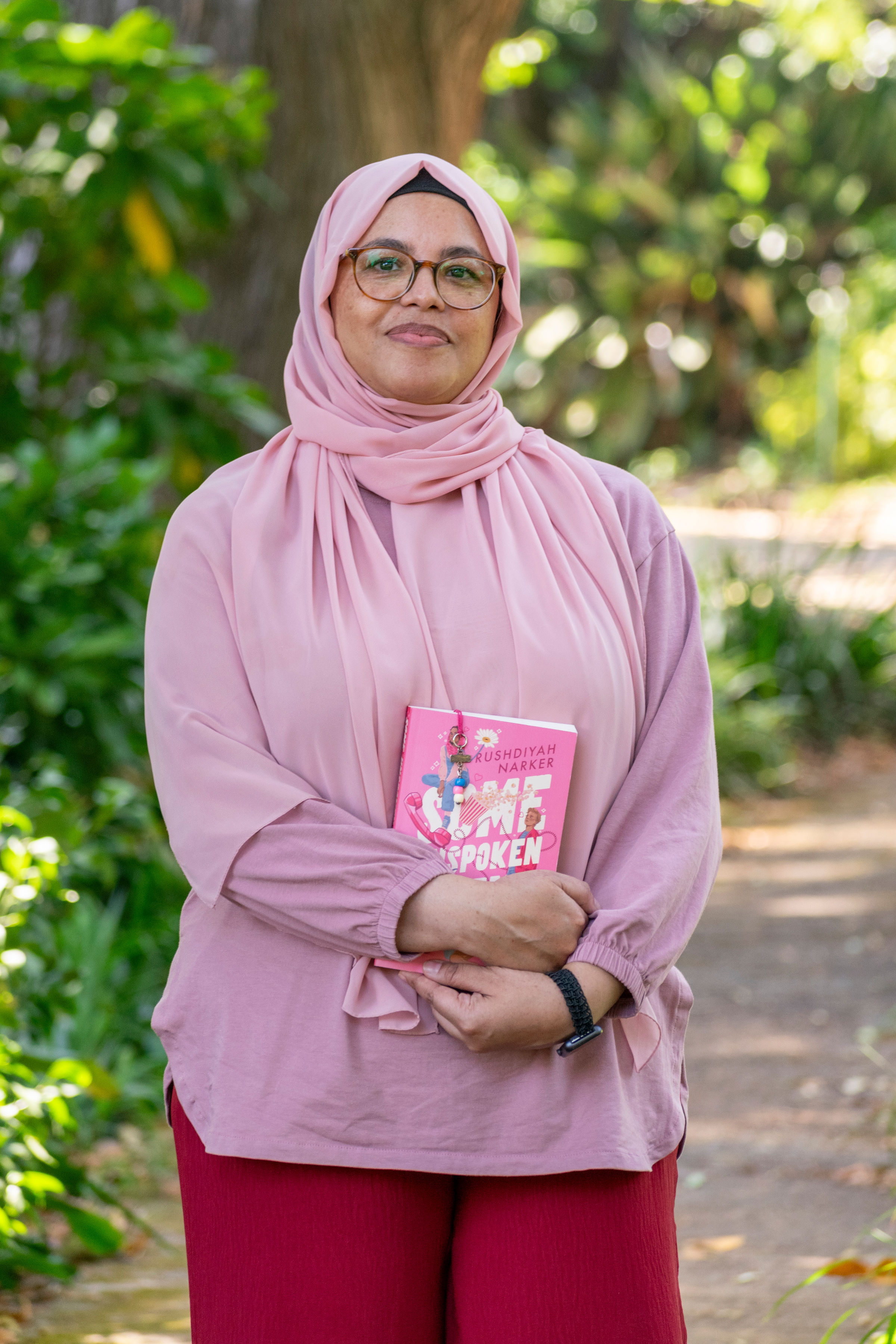
Rushdiyah Narker
Rushdiyah Narker has moved from making up stories in her head to writing them down. She uses the skills she learnt while getting her Masters in Social Anthropology to write stories about the culture she grew up in. 'Some Unspoken Thing' is her debut young adult novel enjoyed by kids 13 to 60 years of age. For funsies, she reads a book a day and loves to go to the theatre, galleries, and movies to experience different forms of storytelling.
View all work by Rushdiyah Narker