
A Seat at the Table: First Dates, Second Chances and a Whole Lot of Laughter.
Rushdiyah Narker reviews ‘First Date: The Musical’ at Homecoming Centre
Share this piece
Pass the story on to your people.
Script: Austin Winsberg
Music and Lyrics: Alan Zachary and Michael Weiner
Direction: Byron Bure
Musical Direction: Casey Wallace
Choreography: Angelica Hattingh and Amber Morgan
Starring: Ethan Saunders, Emma Amber, William Young, Kirsten Pienaar, Asanda Mngadi, Zoë Chetty, Robert Shenton, Nikita Latimer, and Ethan Dunk
Venue: Homecoming Centre
Genre: Musical / Romantic Comedy
Performance Dates: 21 October 2026 – 1 November 2026
I stepped into Homecoming Centre excited but unaware that First Date: The Musical was not a South African story and that it was a hit Broadway comedy!
With music and lyrics by Alan Zachary and Michael Weiner, and a script by Austin Winsberg, First Date: The Musical tells the story of Aaron and Casey, two polar opposites, whose blind date goes wonderfully, awkwardly, and hilariously off the rails – as awkward moments unfold and sparks fly, insecurities surface. Through hilarious and heartfelt musical numbers and energetic choreography, Aaron and Casey’s emotional baggage and inner conflicts take centre stage, turning an ordinary blind date into a chaotic, entertaining and touching exploration of modern love, vulnerability and the possibility of finding romance when you least expect it.
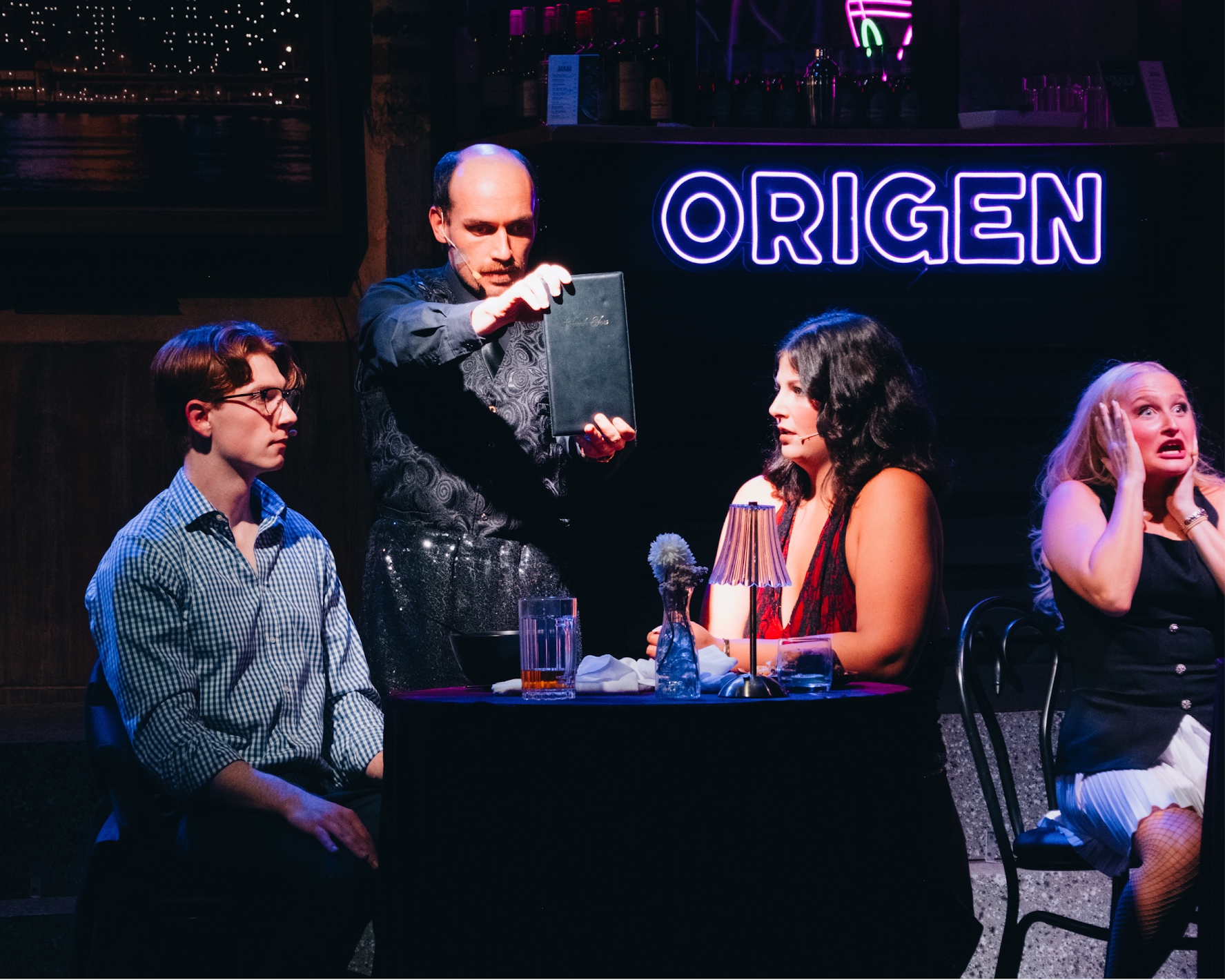
Ethan Saunders centres this play with Aaron – a nerdy, anxious banker who is entirely new to blind dating. He is attempting to re-enter the dating scene after a devastating breakup with his ex named Alison.
Saunders is fidgety, speaks rapidly in short sentences, and appears short of breath when he first enters the stage and interacts with the waiter. He is able to maintain these nervous mannerisms throughout his performance, even extending them into his musical numbers. Although Saunders sings beautifully and with conviction, his body language remains uncertain and quirky, ensuring that Aaron’s anxious personality remains consistent, even when he breaks into song. Saunders made me root for Aaron from the outset because he ensured that the character came across as a genuinely “good” guy. His comedic timing is excellent, particularly in the way he uses his nervous energy and awkward delivery to generate laughter without making his character seem like a caricature.
Then Casey enters, portrayed by Emma Amber. She is set up on a blind date with Aaron. Instantly, Aaron’s nervous over-talking clashes with Casey’s cold defence mechanisms.
Both characters immediately regret the setup.
Casey is a fierce, cynical, serial dater. She is guarded, emotionally unavailable, and chronically attracted to “bad guys”. She is sarcastic, a straight shooter, and calls her date out on his problematic comments.
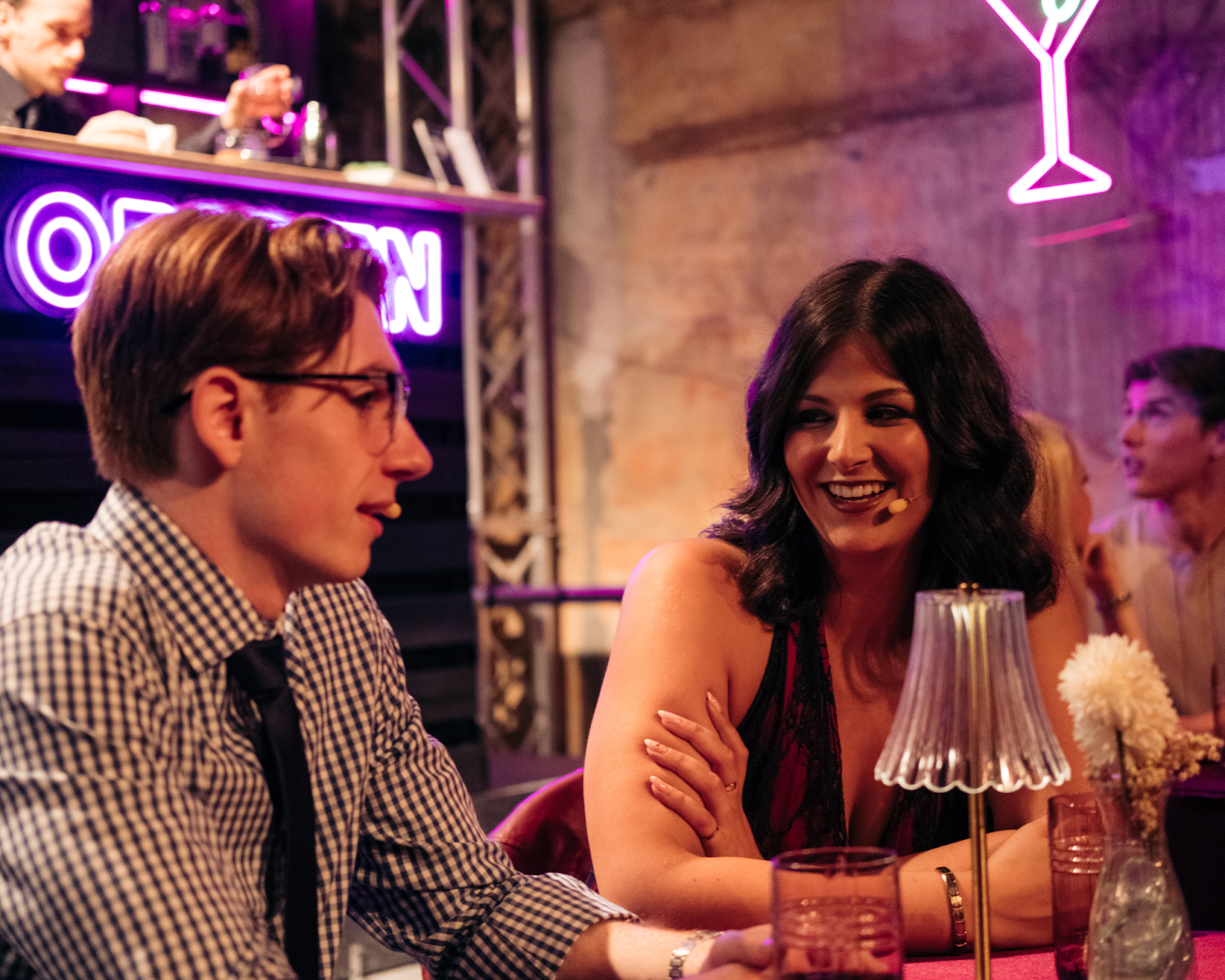
Winsberg’s script is both sharp and heartfelt, allowing audiences to empathise with both Aaron and Casey. Although the show first premiered in 2012 before transferring to Broadway in 2013, its commentary on loneliness and the complexities of modern dating remains just as relevant to South African audiences in 2026.
When I was a teenager, getting to know someone online was viewed as highly dangerous; we only met in person. In today’s modern dating scene, however, and especially after COVID, most interactions occur in a virtual space. A single friend just told me how after being in a work video that was posted on social media, someone tracked her personal account down and messaged her to say it was love at first sight. He explained all the hoops he had jumped through to find her. He thought it showed the amount of effort he's willing to put into a potential relationship; she found it to be stalker behaviour.
For research for my new novel, I asked women to share their worst dating stories.
I was surprised and horrified by what men thought was okay.
One person was asked to send feet pics the second time they spoke on WhatsApp. One recounted a man trying to coerce her into leaving the coffee shop they agreed to meet and going to his hotel.
From my conversations with younger, single friends, the hardest part about making connections is finding someone who is sincere in wanting to be in a relationship. Many, they say, are interested in having a bunch of women who they flirt with, with no intention of following through.
These accounts reveal some of the reasons people approach dating with caution, even when they long for companionship. Reflecting on First Date: The Musical, I recognise that same tension between hope and self-protection in Aaron and Casey. Their nervousness and defensive humour feel familiar when considered alongside the experiences women have shared with me.
And despite their initially awkward interactions, I understand why Aaron finds it difficult to put himself out there again and why Casey has built walls around herself. Dating in 2026 can be a plethora of mixed signals, unrealistic expectations, and people who are not always honest about their intentions. Beneath Aaron’s nervous rambling and Casey’s sharp sarcasm, are two people, like so many of us out here, who just simply want to find a genuine connection without getting hurt in the process. This is what makes their first encounter so relatable.
Amber brings Casey to life through her sharp delivery, sarcastic remarks and seemingly effortless confidence. Whilst Saunders makes Aaron’s nervousness overt, Amber hints at the unease beneath Casey’s self-assured manner through subtleties in her body language: she holds herself stiffly and clutches the strap of her bag as if her life depends on it.
Amber further captures Casey’s quick wit with rapid-fire responses, often anticipating how Aaron will finish his sentences before he has the chance to do so. Her impressive comedic timing gives Casey’s snarky, forthright dialogue its bite, whilst her eagerness to respond suggests that her confidence may also be a defence.
This complexity is not easy to pull off, as Casey is a character that gradually lowers her emotional defences, revealing a softer side to a character who initially seems cold and unapproachable. It is this balance between sarcasm and vulnerability that makes Amber’s portrayal so relatable. We all know moments when we put up walls to push someone away out of fear of being hurt. As the audience, we understand why she is so guarded, and her reluctance to let him in makes complete sense to us. In the end, we are all rooting for her to get the guy and let him in.
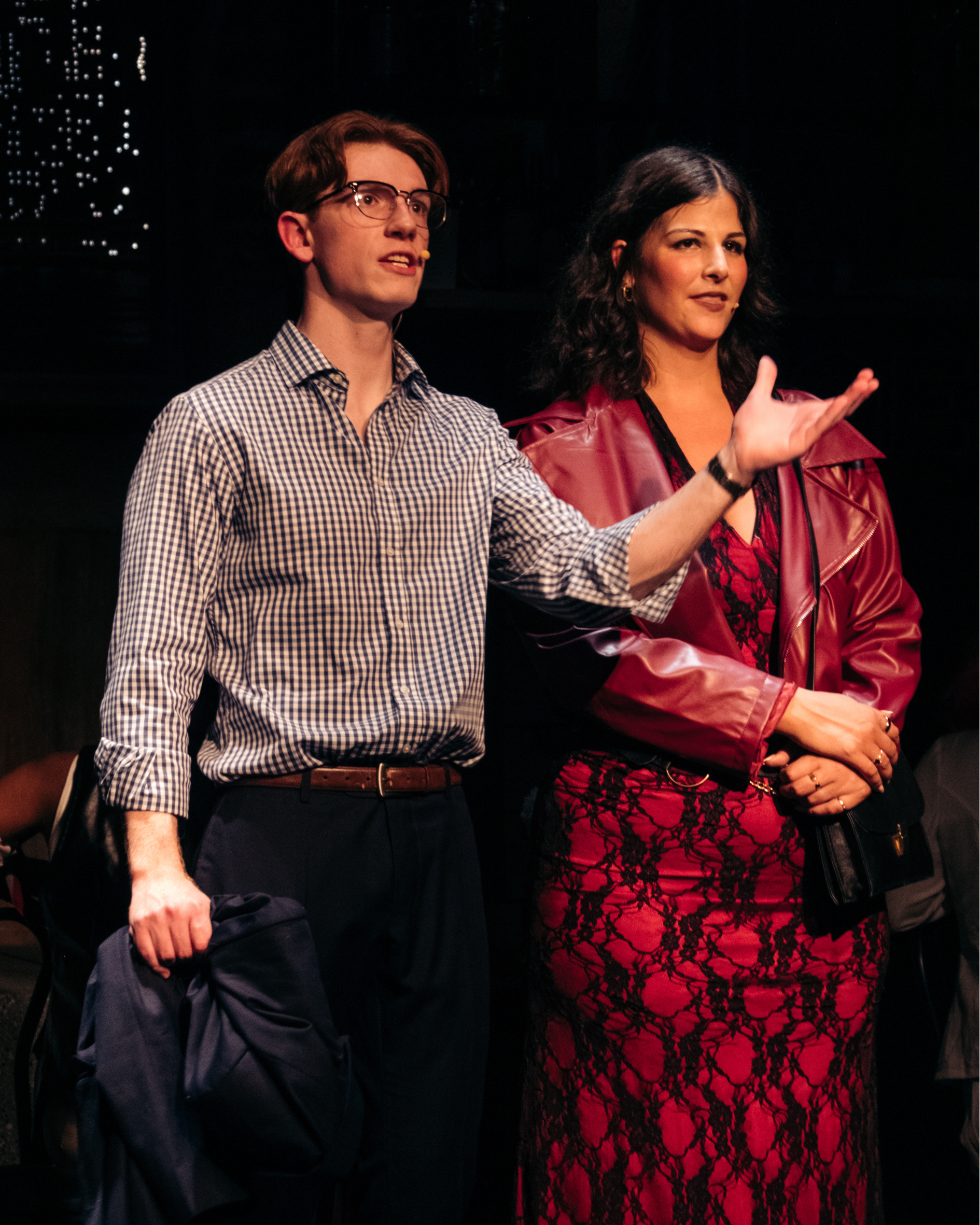
The director, Byron Bure, brings the familiar anxieties and awkwardness of dating to life through a bustling restaurant setting, where Aaron and Casey are not the only ones navigating the unpredictable world of romance.
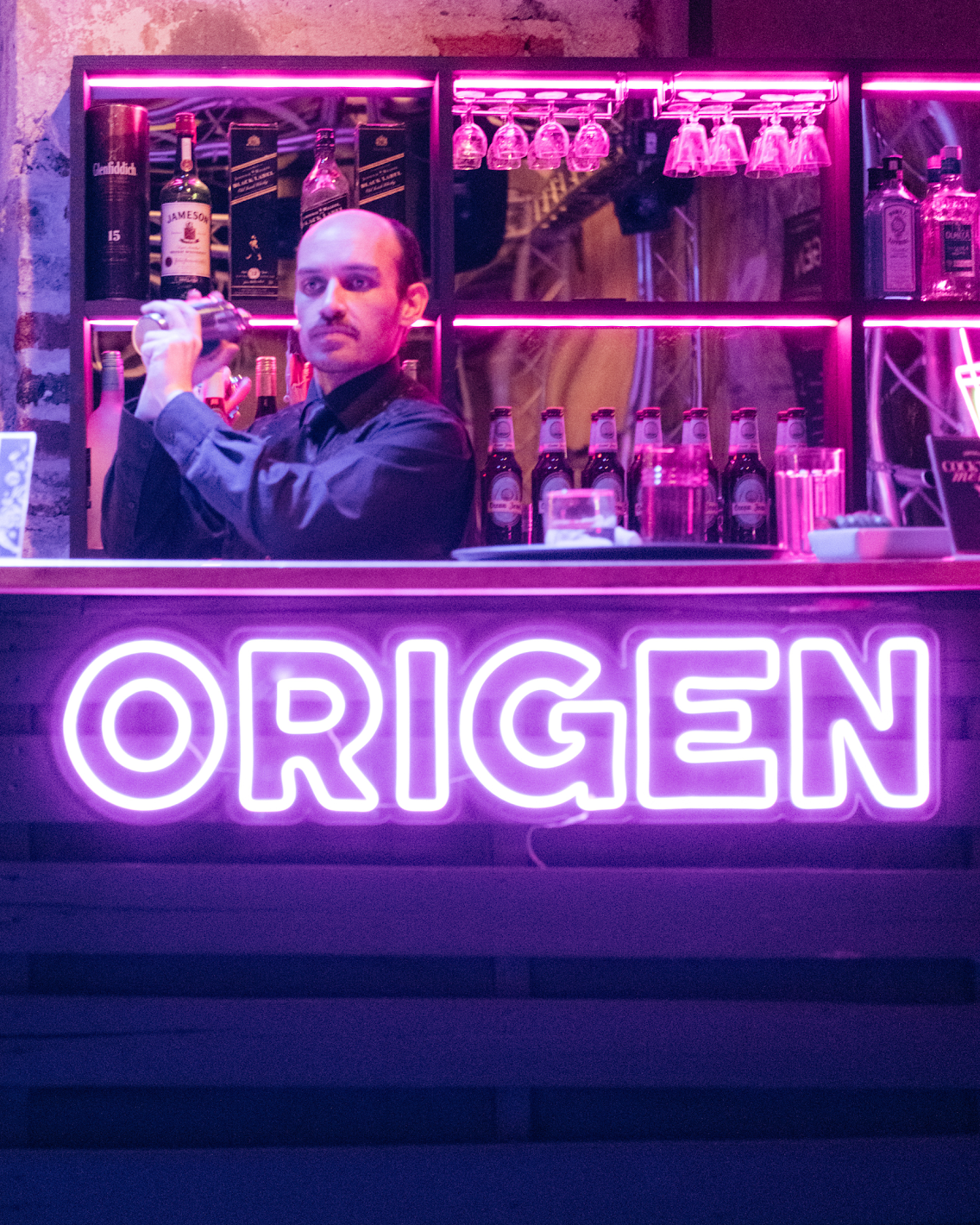
The stage features three restaurant tables, each occupied by a couple on a date. The ensemble are active props on the stage. They are not sitting idly by, but are silently conversing with each other, moving in and out of each other's spaces at the tables. The cast members play more than one character, and they put on and remove clothing items while at the tables with their respective dates. The costume changes are executed flawlessly. The Waiter stands behind the bar, busying himself with cleaning glasses, checking that things are in place for a busy night ahead.
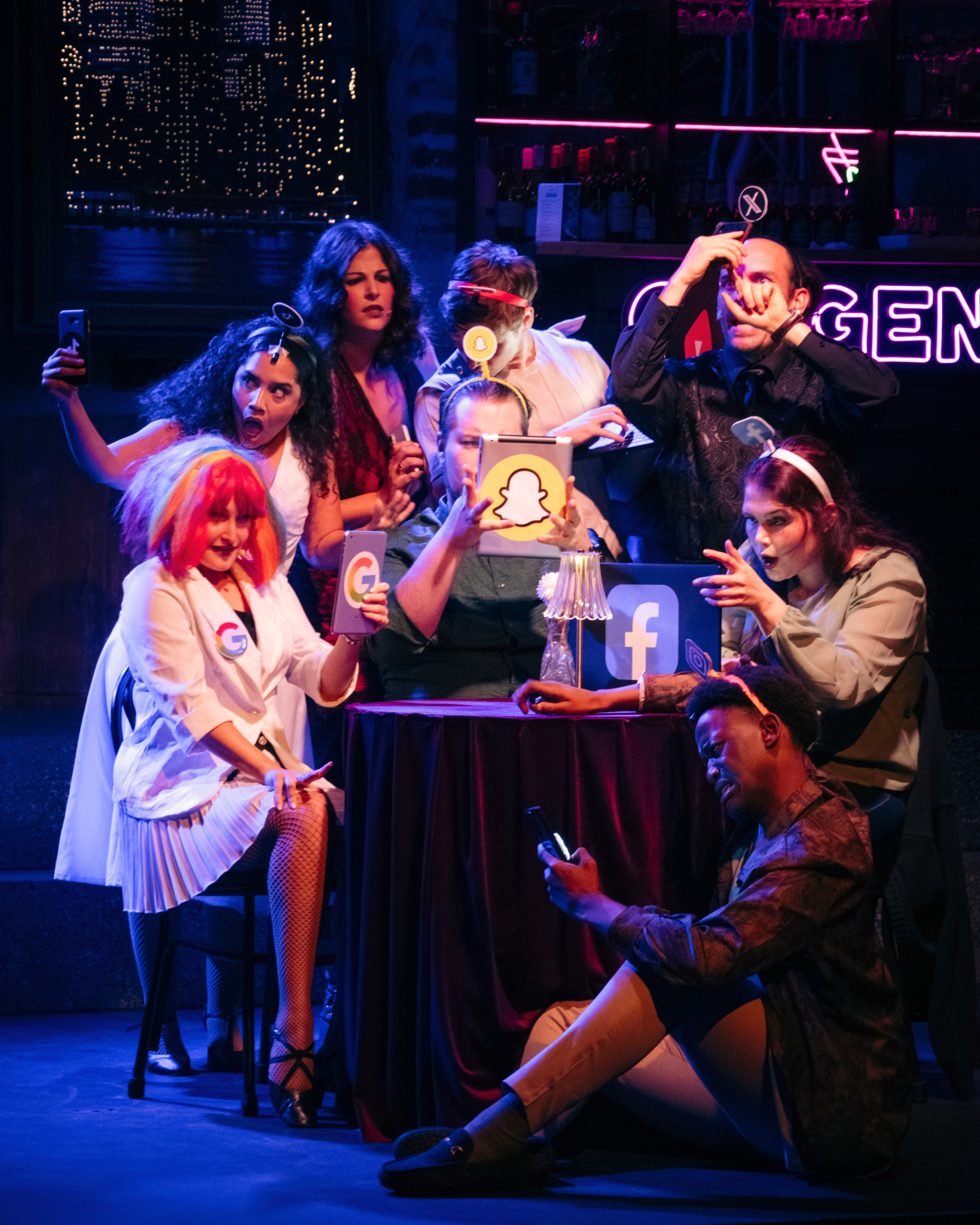
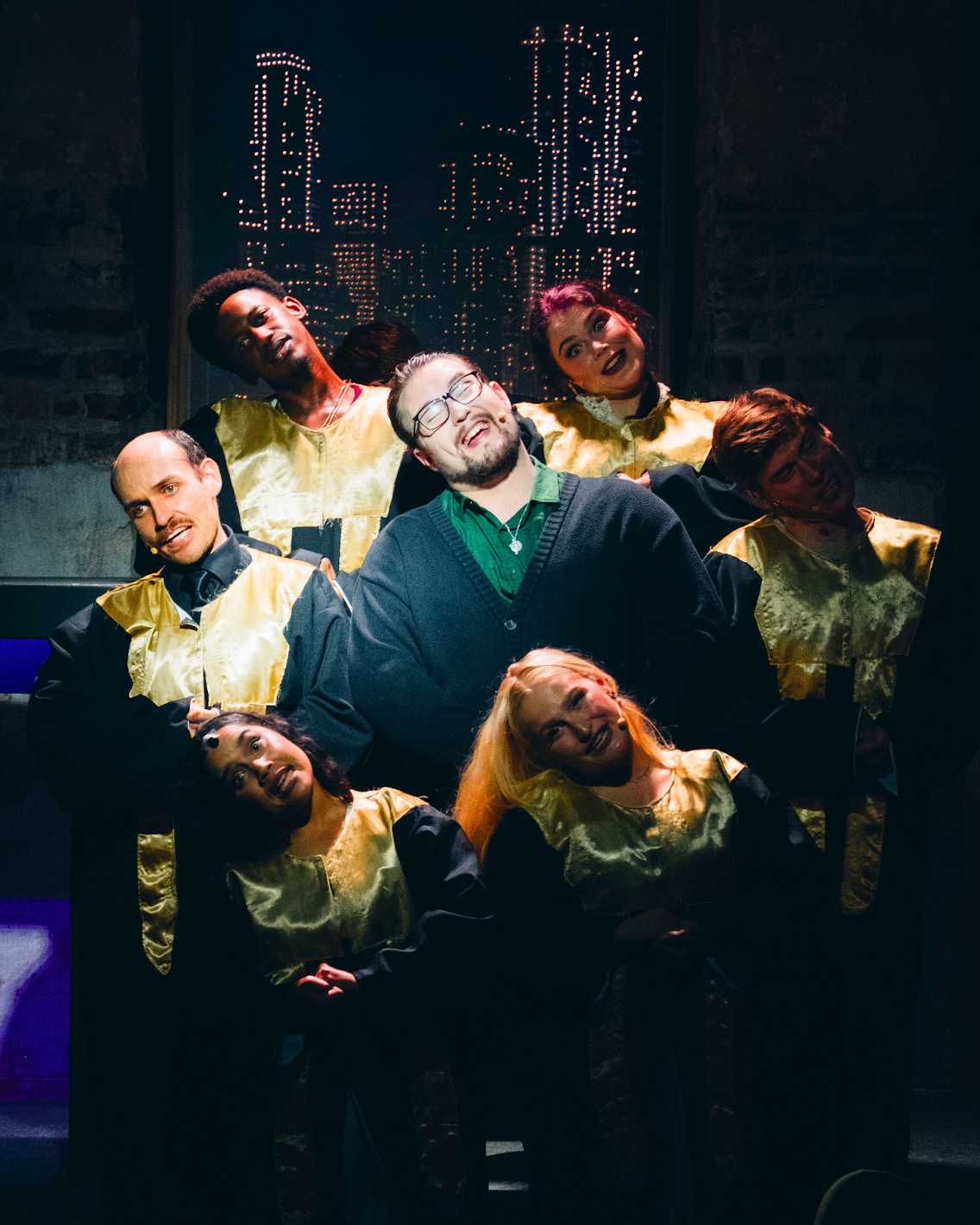
As the conversation progresses, audiences are introduced to Aaron and Casey’s insecurities, inner voices, and tendencies towards self-sabotage. This is where the ensemble cast transforms into manifestations of the characters’ inner thoughts, bringing their anxieties, memories, and emotional baggage to life through song and dance. The performers seamlessly shift from portraying ordinary restaurant patrons to embodying figures from Aaron and Casey’s pasts and imaginations, using subtle costume changes, exaggerated mannerisms, and musical numbers to distinguish between their various roles. As Aaron and Casey get to know each other, the other couples fade into the background, but their continued interactions maintain the atmosphere of a bustling restaurant, ensuring that the stage never feels static.
Aaron frequently imagines conversations with his best friend, Gabe, portrayed by William Young.
Gabe is overbearing, loud, and overconfident. Young’s performance of Gabe contrasts sharply with Saunders’ portrayal of Aaron. Remember, Casey and Aaron have already been established as polar opposites, yet the differences between Gabe and Aaron are equally striking. It takes considerable comedic skill to portray such an exaggerated personality without reducing the character to a caricature, particularly in a romantic comedy where humour often relies on contrasting personalities. Young skilfully brings Winsberg’s sharp writing to life, and without his convincing portrayal of Gabe’s exaggerated personality, the contrast between Gabe and Aaron, which highlights the different attitudes men have towards dating and relationships, would not have been nearly as effective.
While Saunders portrays Aaron as unsure and timid in his interactions with Casey, Young brings an almost overwhelming confidence to Gabe. His boisterous delivery, exaggerated mannerisms, and tendency to shout make him hilariously obnoxious, yet thoroughly entertaining to watch. Young’s comedic timing is excellent, and his delivery of his lines had me guffawing so loudly that the person sitting a seat away from me looked over to check if I was okay.
Through Gabe, the audience encounters Winsberg's commentary on toxic masculinity, particularly how women are there for the taking. Through Gabe’s lens, we see what many men see – the main aim of a date is to obtain sex. His expectations of a date are superficial and reinforce the ideas around dating that put many off even trying the experience.
Young later transforms into Stoner Guy, and his costume and, more importantly, his demeanour change, making each character different.
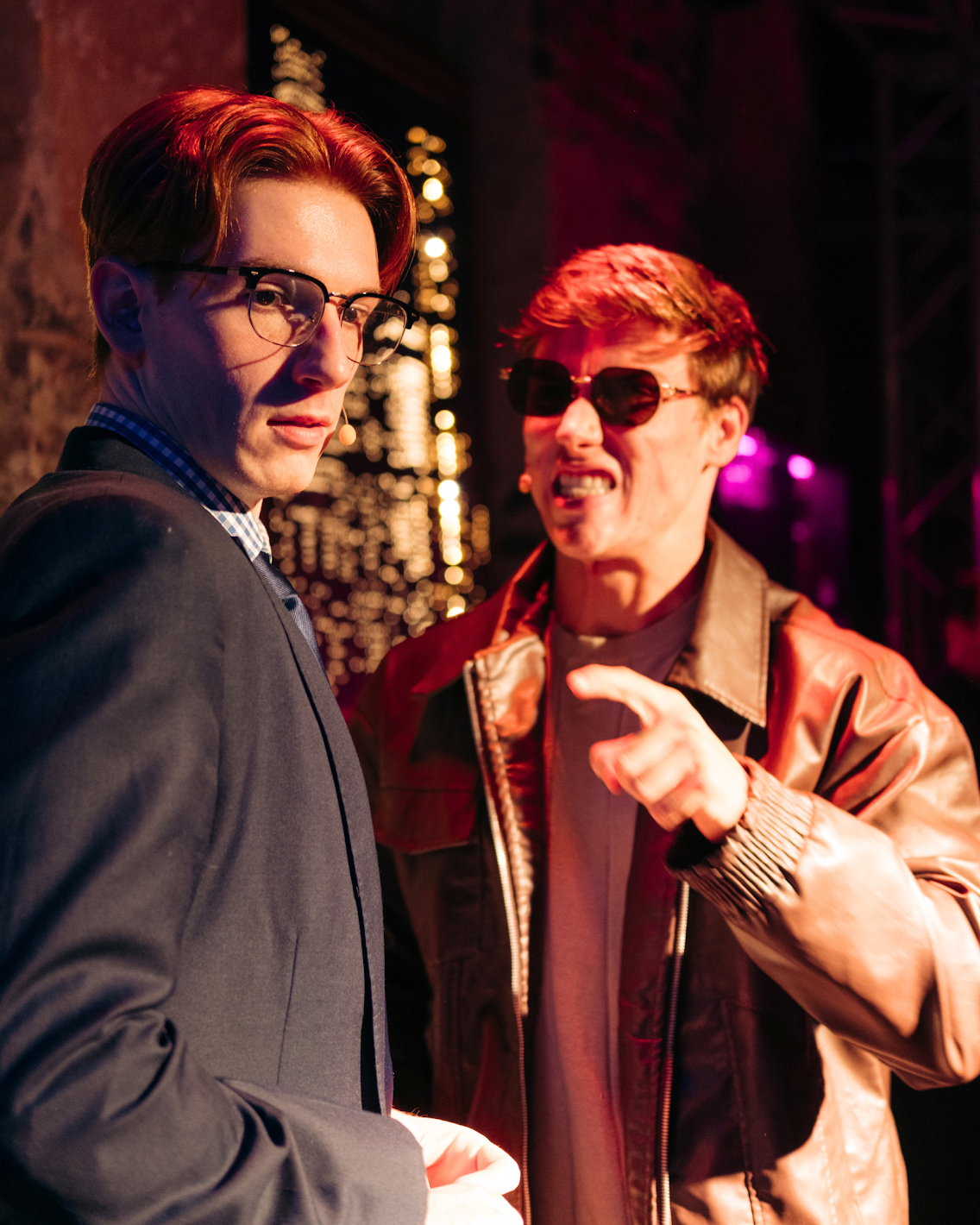
Aaron's insecurities become even more apparent through his imagined interactions with his ex-girlfriend, Alison, portrayed by Zoë Chetty. Through this encounter, we learn how Aaron is held back by fear of rejection and struggles to let go of his past. It sheds light on his approach to the blind date in the present by showing us his history.
Chetty is delightfully unlikeable as Alison. She belts her songs while enticing Aaron with seductive smiles and flirty body language across the stage.
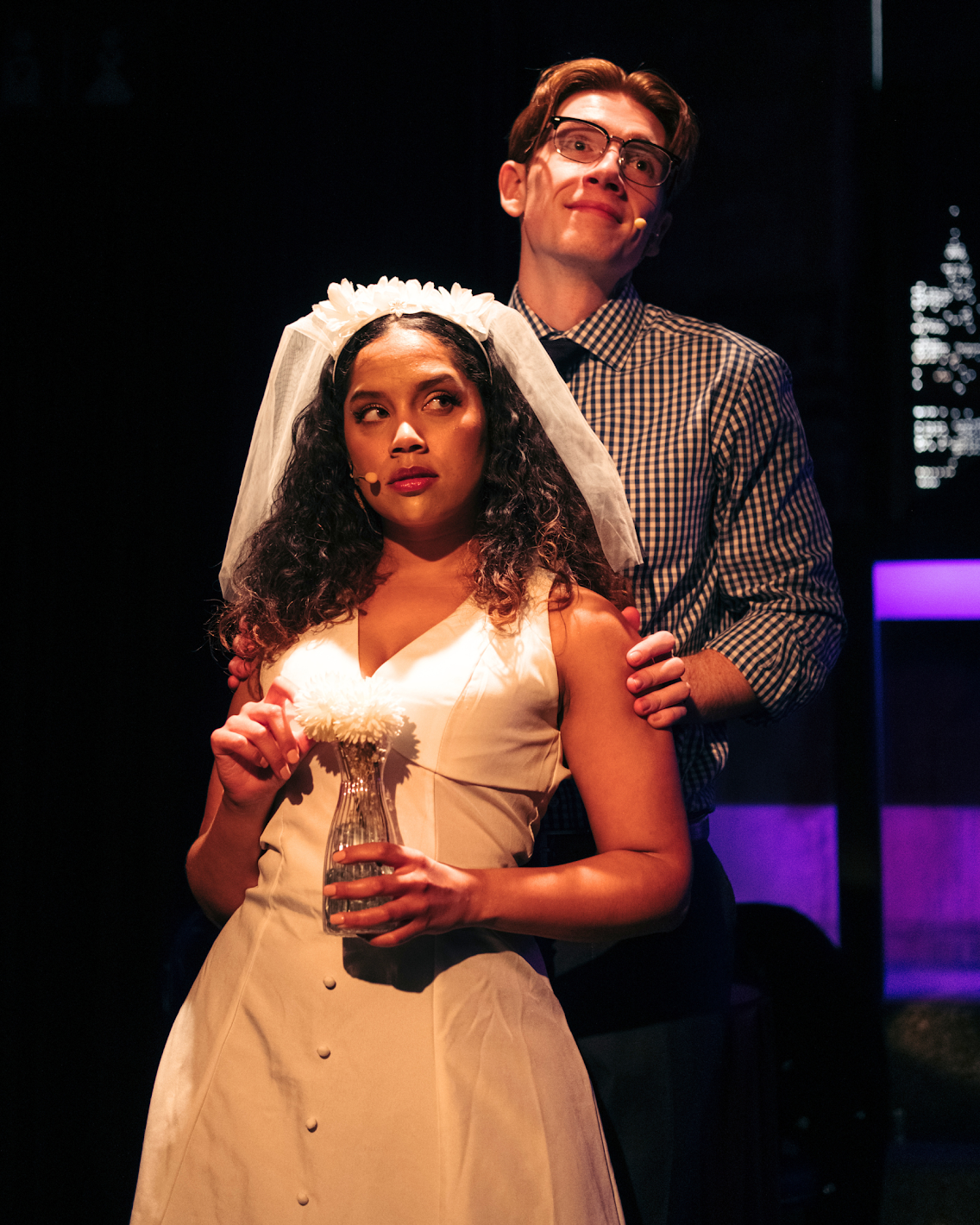
However, Aaron is not the only character whose imagination runs wild. Casey frequently imagines conversations with her sister, Lauren, portrayed by Kirsten Pienaar. Casey hears a distinct message from her sister, encompassing all of her insecurities, and Pienaar has the perfect tone for bringing this up in Casey’s imagined conversations with Lauren.
Pienaar further demonstrates her versatility by portraying Aaron's mother and Grandma Ida. She adds small clothing items, changes her body into a bent-over, crotchety woman as the Grandma, has perfect posture as the sister, and a judgemental demeanour as Aaron's mother.
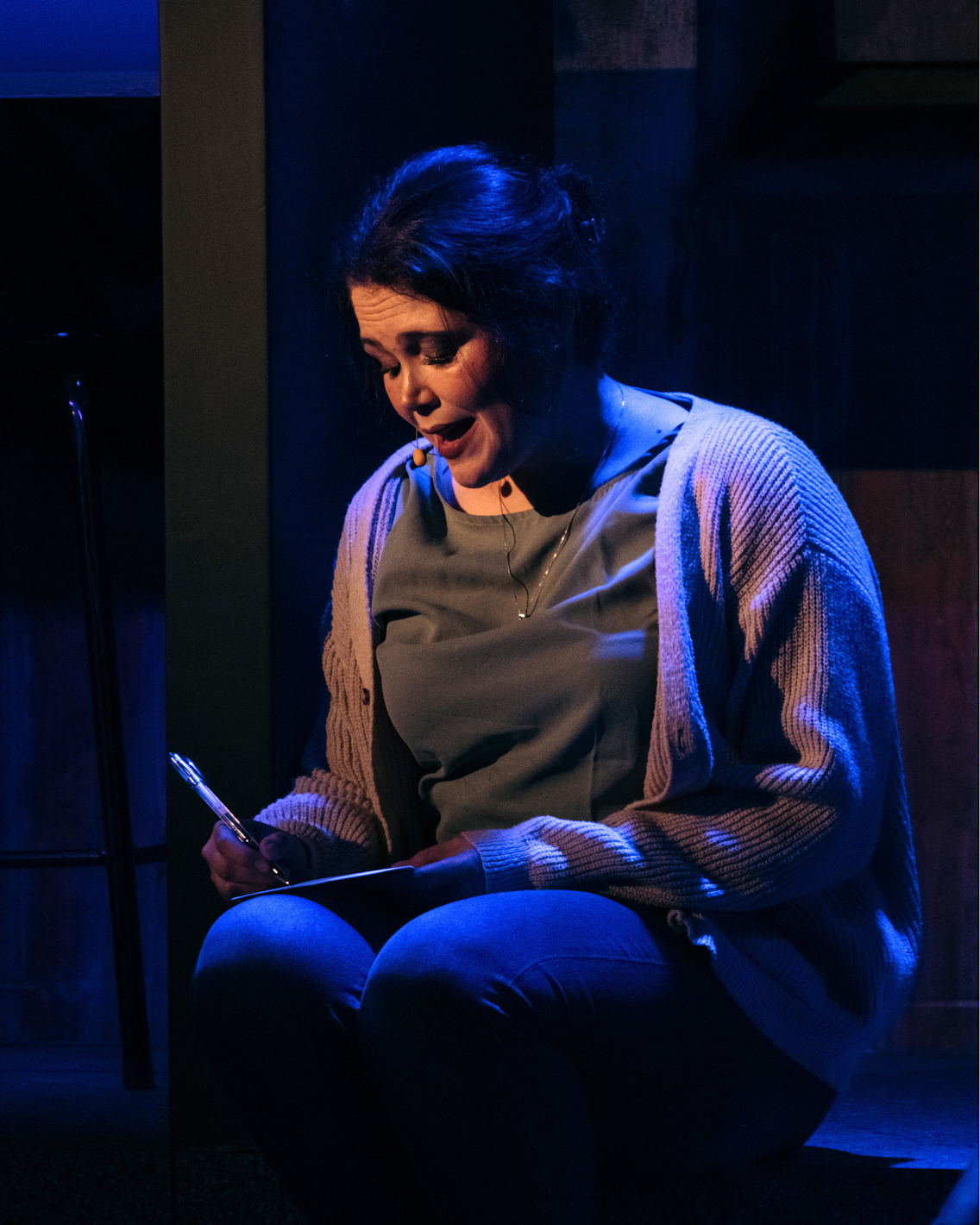
Then, Casey also hilariously employs the familiar dating tactic of arranging an emergency phone call, asking her best friend to check in on her during the date and provide a convenient excuse to leave should things go awry!
Asanda Mngadi portrays Reggie, Casey's loyal best friend, who sings, “This is your bailout, sweetie, your bailout. Honey, I'm callin' to bail you out.”
Although the song serves as a recurring comedic device throughout the musical, it also reveals Casey's defence mechanism, highlighting her tendency to avoid emotional vulnerability and retreat from romantic situations before she risks getting hurt. Despite the humorous timing of the bail-out call, it is clear from the message he leaves for his friend that they care about each other and protect their friendship.
More importantly, the inclusion of Reggie and his concern for Casey speaks to a much darker reality for women in South Africa, where even something as ordinary as going on a date can pose a risk to their safety. Although Winsberg grew up in Los Angeles, California, this comedic device takes on an additional layer of meaning when performed before a South African audience. What might initially seem like a humorous portrayal of a friend offering an excuse to escape an awkward date also becomes an important example of satire and social commentary, highlighting the precautions women must take to protect themselves from potential danger. According to SAPS figures, 9 201 sexual assaults were reported between April and June 2026, amounting to more than 100 cases a day, with the true extent of sexual violence remaining difficult to establish because many incidents go unreported. Winsberg may not have intended for Reggie's bail-out call to carry such a sobering social commentary. However, staging a theatrical work in a different country and cultural context (even while retaining its original New York setting) allows audiences to interpret its themes through their own lived experiences, giving the playwright's words new layers of meaning and social relevance that extend beyond their original intentions.
Mngadi further showcases his versatility as a British rocker and one of Casey's former lovers, amongst other ensemble roles. Mngadi’s accent changes for each role, and it is flawless.
Side note: the cast are all performing using American accents. I saw a video on Instagram where the cast were being interviewed, and I was stunned to hear their South African accents.
Also joining the ensemble is Robert Shenton as the aforementioned Waiter, who frequently interjects in Aaron and Casey's increasingly awkward encounters, providing much of the production's comic relief.
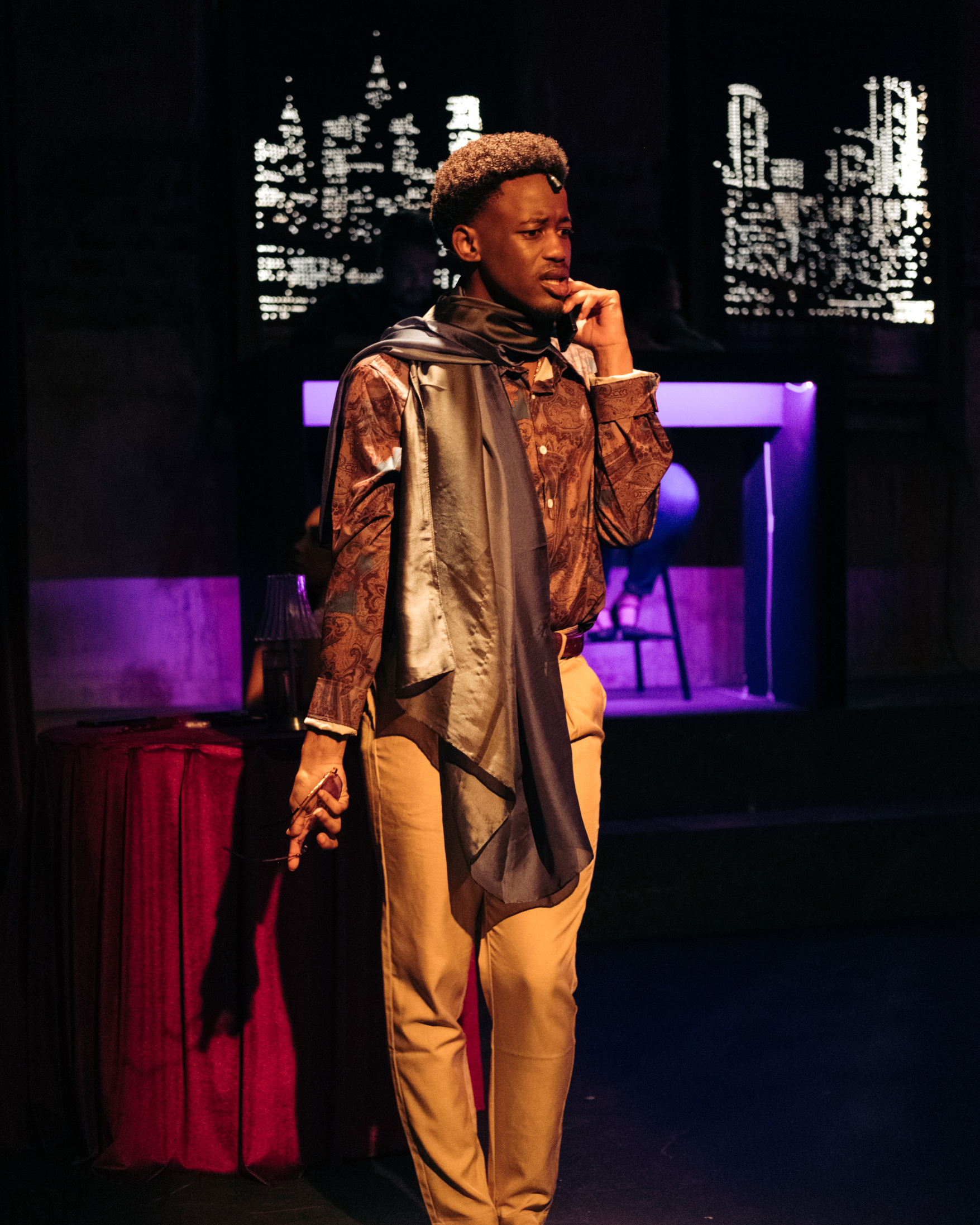
Shenton is important in setting up Aaron’s character in the first scenes. Because of the questions the waiter asks Aaron, and the way he asks them, the tone is set for the rest of the show. His performance also gives the audience a minute to catch their breath within the build-up of Aaron and Casey’s story.
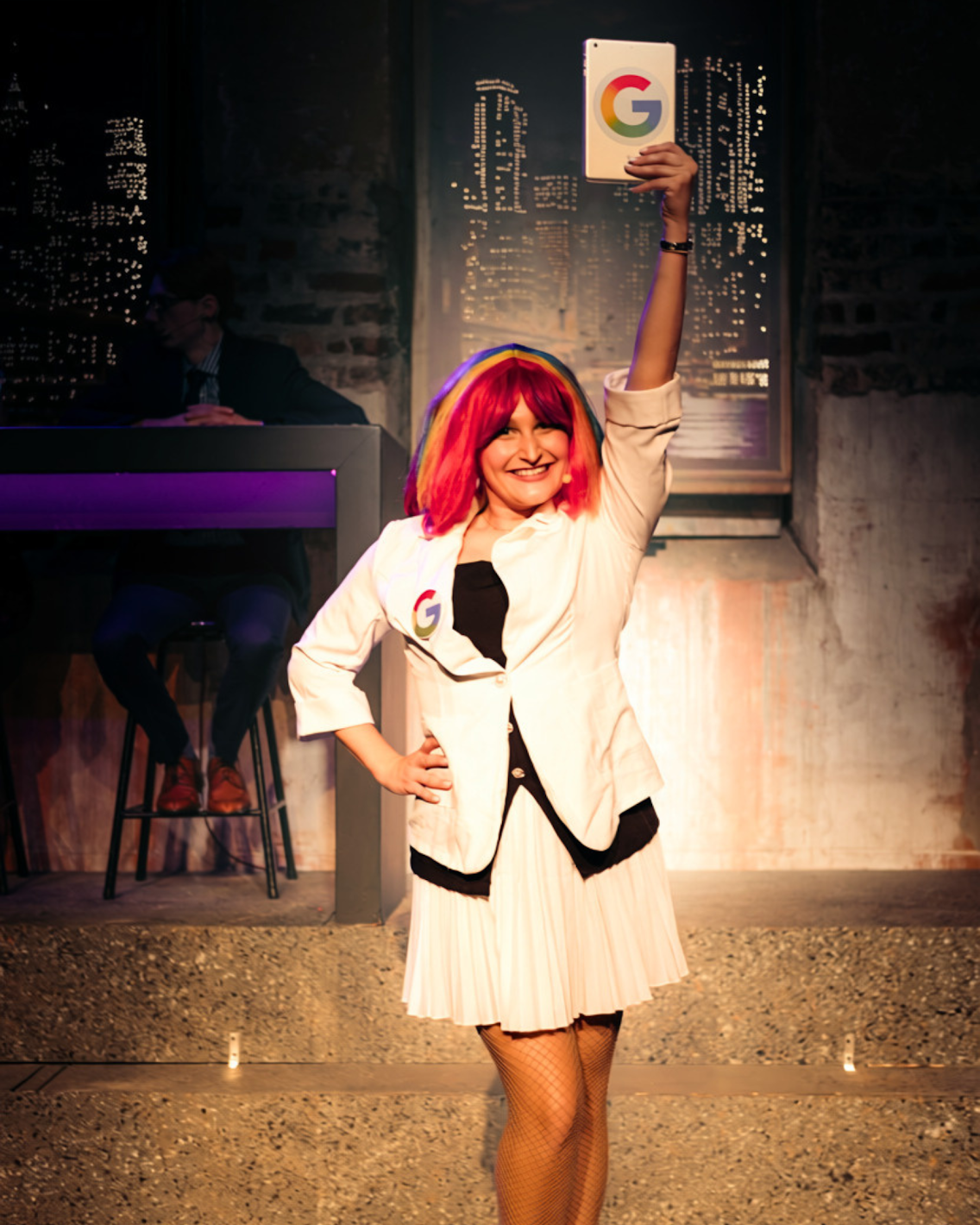
Rounding out the ensemble are Nikita Latimer as the physical manifestation of Google and Ethan Dunk as Casey's father and psychologist. These performers have less stage time than the rest of the cast, especially Dunk. But when the group performed together, the harmony they created with their voices was beautiful.
First Date: The Musical’s strongest asset is the chemistry between the characters Casey and Aaron. They feel real.
Saunders and Amber do a wonderful job of acting like the awkward man and forthright woman who initially seem to be such an unlikely pair, yet I could not help but root for them and want them to end up together – the show is, after all, a romance, and that alone guarantees the viewer that happy ending!
The true test of knowing the essence of a story is if the journey there is enjoyable.
As a director, Bure understands that the humour of First Date lies not only in the awkwardness of two strangers getting to know each other, but also in the insecurities and emotional baggage they bring into a potential relationship. Through the music, comedy and performances of his cast, he allows audiences to laugh at Aaron and Casey’s misfortunes whilst still empathising with their desire to find love.
Despite the uncertainty, questionable intentions and emotional challenges of dating in 2026, First Date: The Musical offers a comforting reminder that genuine romantic connections are still possible.
In a dating world where sincerity can be difficult to find, and where past disappointments often make people reluctant to open themselves up to love again, Aaron and Casey represent two people who are afraid of getting hurt but still long for companionship. Could this is what makes romance such an enduring and beloved genre? We know that the characters will find love, but we remain invested in their journeys because their fears, insecurities, and longing for companionship reflect our own. Even when the ending might be predictable, it’s reassuring to watch two people overcome the obstacles between them and the possibility of happiness.
The romance genre is often perceived as a lesser form of storytelling. Despite this, romance fiction remains one of the biggest draws for audiences. We see it in the romance corner of BookTok, where novel after novel is being signed to become a film or series on streaming services, like Off Campus, Sterling Point, and The Love Hypothesis. So why do people ooh and aah over romance, and why does a genre that may not be taken seriously inspire such devotion?
Part of the answer is comfort.
Romance gives us hope that love exists in its many forms. In the political climate of today, the predictability of a romance can be a refuge for the person engaging with it. We know the shape of the story before we begin, and that certainty is a relief when the real world feels anything but certain.
Then there is the feeling itself.
The butterflies when two people meet, the banter that is flirtatious and disarming, the first charged moment where the air shifts between them. That feeling is what sends people back for more, even though we know the ending. In fact, it is the predictability of the ending that keeps us coming back.
Contemporary romance can be fast-paced, holding the audience in moments of high highs and low lows as the inevitable conflict surfaces. But we know for a fact the trouble will be resolved. That knowledge lets us surrender to the ride, because the stakes are emotional, not uncertain.
This is also why we root so hard for the characters. We are not simply watching two people fall in love; we are invested in them getting there. We want the guarded one to finally let their walls down. We want the misunderstanding cleared up and the grand gesture to land. Rooting for them feels like rooting for the part of ourselves that hopes to be chosen, understood, and loved. And that is the heart of it: everyone wants love. Even those who claim otherwise are rarely immune to the sight of two people finding each other.
We can borrow the characters to lift our spirits in a world that seems to be going down in flames around us. Romance serves as an escape for a few hours. It allows us to experience those emotions again if we have known them, and to hope to find them if we have not. The genre promises us a happy ending when sometimes our own lives are anything but. Perhaps that is exactly why it deserves to be taken seriously. Perhaps it shows us over and over that the risk of opening ourselves can lead to love being reciprocated.
And this message feels particularly significant when a romantic comedy like First Date: The Musical is performed on a South African stage by South African actors, where audiences bring their own experiences of love, disappointment and the challenges of modern dating (all universal feelings) into the theatre.
In a dating world where sincerity can be difficult to find, how do we know when someone’s intentions are genuine?
How do we open ourselves up to love when past disappointments have taught us to be guarded?
And how do we overcome our fear of rejection when all we really want is companionship?
I may not have the answers to these questions, but I can say without any doubt that my journey through First Date: The Musical was more than just entertaining; the show pulled on my emotional strings and made me feel giddy with the satisfaction of the ending I was promised.
My first experience of a Broadway musical staged in South Africa was a hit, setting a high standard for the musicals I will watch in the future, thanks to the exceptional performances of the cast and the impressive work of the production team.
I look forward to seeing more of Bure’s work, as well as future performances by this talented cast, and wish them every success as they continue their theatrical careers.
Does finding love require us to let our guards down, embrace our vulnerabilities, and take a chance on someone, even when there is no guarantee that things will work out?
About the author
Rushdiyah Narker
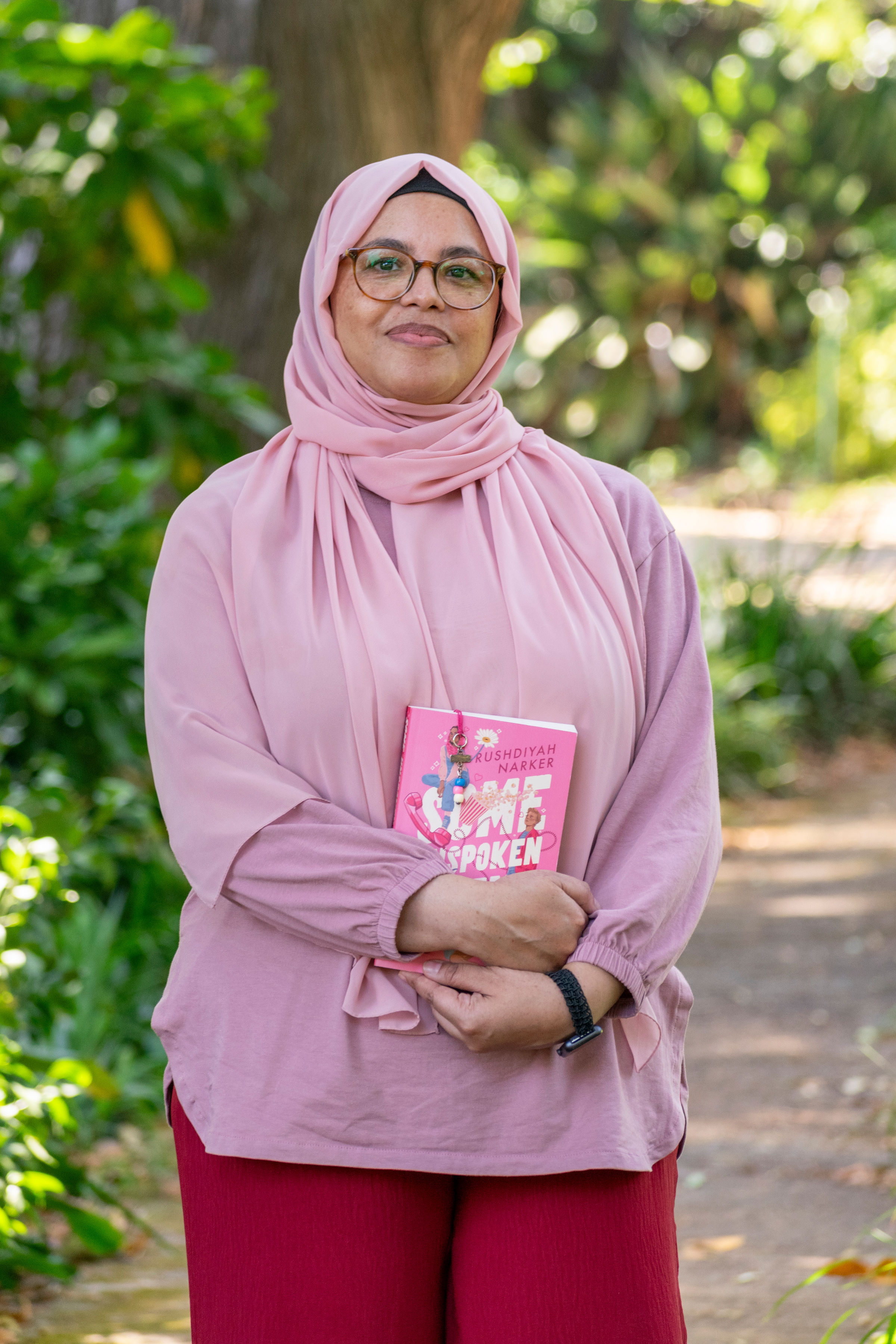
Rushdiyah Narker has moved from making up stories in her head to writing them down. She uses the skills she learnt while getting her Masters in Social Anthropology to write stories about the culture she grew up in. 'Some Unspoken Thing' is her debut young adult novel enjoyed by kids 13 to 60 years of age. For funsies, she reads a book a day and loves to go to the theatre, galleries, and movies to experience different forms of storytelling.
View all work by Rushdiyah Narker